Code — Edition Insights

(0 User reviews)   104
In Category - Sea Voyages
Pierce, Frank Richardson, 1881-1966 Project Gutenberg 2025 Not confirmed
Short stories; Sea stories; Ship captains -- Fiction; Smugglers -- Fiction Readers of public-domain and historical texts
Project Gutenberg digital edition en

Edition facts

Words 5,274
Reading time 23 min
Text sections 1

Before opening Code — Edition Insights, the edition data offers a quick orientation: 5,274 words, 23 min estimated reading time, and 1 detected text section.

The text analysis averages about 17.0 words per sentence, while the detected sections provide another way to judge how the source is divided.

Project Gutenberg metadata also associates the work with “Short stories,” connecting these edition facts with the source record’s subject description.

In this sea story, two old-school captains—one on a Coast Guard cutter, the other on a rum runner—face off off the Pacific coast. Pierce's prose contrasts duty and stubbornness through clipped dialogue and sensory detail, as a falling glass and a coming storm test the mariner's code.
Share
Editorial Edition Score 4.4/5

Calculated from edition completeness, EPUB availability, text structure and catalogue metadata. Not a user rating.

How this score is calculated
  • Description quality20 pts
  • Title & short description10 pts
  • Source metadata20 pts
  • Text length15 pts
  • Chapters / structure15 pts
  • EPUB file integrity20 pts

Total of 100 points, scaled to a 2.5-5.0 range. Editions with an empty description or a missing EPUB file are not scored.

Edition quality

Read the Text

ayton_ from landing her cargo. McNulty, though he was none too keen about the job, was determined to see it through now that he had agreed to Pritt’s proposition.

An hour later the storm was upon them. Great seas crashed over the deck; the woodwork creaked and groaned as the vessel labored. McNulty paced a spray-drenched bridge. He was dressed in oilskins and the face peering from beneath the sou’wester was ruddy and glowing with the joy of battle. The blue eyes peered into the darkness and saw many things denied the landsmen. The flesh about the eyes was lined and seamed from many years squinting, for phantom ships leap unexpectedly from the fog; phantom reefs bare their fangs on stormy nights and the sailor’s only guess must be the right guess.

With this man on the bridge a sense of security stole over Pritt. He retired to his bunk, snuggled in the warmth of the blankets and listened to the roar of the storm and the break of the seas against the riveted walls. The pulsations of the engine lulled him to sleep.

It was the change in the engine room rhythm that awakened him. Sensing the unusual, Pritt dressed hastily. The _Crayton_ was wallowing in a troubled sea. Sounds that the engine usually stilled became audible; spray hissed; waves broke and rushed into an inky night. “What’s the trouble, Captain. Coast Guarder?”

The Coast Guard vessels were a nightmare to Pritt. The storm might have driven them within the twelve mile limit.

“Vessel in distress. See her? Dead ahead, sir!” The skipper pointed a stubby finger. Pritt could see nothing, but presently a flare outlined the masts and shrouds of a small schooner. She was barely making headway. “Full speed ahead, Mr. Hansen! We’ll speak her!”

The mate executed the order, first repeating it.

When she was alongside the battered craft McNulty’s voice boomed a “On deck there?”

“Hello!” The answer came from a figure clinging to the schooner’s wheel. The wind carried half the man’s words away. Pritt caught, “--engineer--foot--in--’chinery--crushed--aid?”

“Engineer crushed his foot in the machinery,” McNulty explained. “Needs aid!” He turned to the mate. “Mr. Hansen we’ll take him aboard.”

McNulty did not say they would attempt to take him aboard the _Crayton_. He said they would take him. It was evident the schooner’s small crew had prepared for this. They carried a limp figure to a contrivance of wood and canvas secured to a midships deckhouse and lashed it. With few words being passed the two crews worked in unison.

Pritt gripped the bridge rail and held his breath as one of the _Crayton’s_ cargo booms swung over the schooner’s deck. The steel block swung dangerously, caught and tore free some light gear on the smaller craft, then came banging against the steamer’s side. With infinite patience they maneuvered the restless craft and bided their time--knowing that in the end it would come.

Deft hands finally caught the block and hooked it into a network of lines as the schooner was on the crest of a wave. The next instant she had dropped beneath the improvised stretcher and the injured man swung into space. The sea leaped up furiously, as if denied its prey, then dropped sullenly away. The _Crayton’s_ hoists whined, then slackened away on the falls as the stretcher came clear of the side. A dozen men rushed forward to stop the swinging burden. It knocked them down and crashed against steel walls of the deck houses. Pritt could feel his own flesh wince as the injured man’s bones snapped from the impact. The falls slacked away suddenly and their burden stopped soddenly in the water surging on the deck. Brief as was the pause it was sufficient for eager hands to snatch the man from the stretcher and carry him into a cabin. Drenched and battered, the men withdrew. The captain and the steward examined the victim.

The skipper’s thick fingers explored his ribs which had taken much of the impact. “Some broken,” he announced. “Arm broken, too! He’s unconscious, but coming ’round. Now for the foot!” The swollen, pulpy mass might have been a foot at one time, but now---- Pritt shuddered. It looked as if it had been fed into a rock crusher.

The skipper scribbled a brief message:

Captain Wold, U.S.C.G. Chinook. Have taken badly injured man from Schooner, Vivian Gill. Leg amputation necessary. Radio position. McNulty, Crayton.

Pritt read the message and licked his lips, suddenly grown dry. “Are you taking him inside the twelve mile limit, Captain?” he inquired.

“Certainly, sir! God was with us in getting him aboard. We could never transfer him again--and be lucky.”

“We might!” Pritt’s voice was hoarse. “If we’re caught inside the twelve mile limit---- God, Captain, and you’re going right into the cove where the _Chinook’s_ anchored. It means--ship and cargo.”

“He can’t be transferred again at sea,” McNulty answered grimly.

“We can’t trifle with a dying man.”

“If the cutter would meet us he’d get attention that much sooner. Try it----”

“I order you to do it, sir!” The words came thickly. Pritt’s face was ashen. A jury might take into consideration the circumstance and free them, but it would never return ship and cargo--it could not. “I order you to at least attempt it, sir!”

“You order?” McNulty’s eyes glittered.

“You’ve forgotten the law of the sea, sir. I am the only man who gives orders on this ship. I am responsible.”

“When we touch port, sir----”

“Yes, when we do,” McNulty rasped anticipating his words. “My chest is always packed!” he added.

Presently the steward returned from the radio shack. The _Chinook_ was lying in Salmon Cove.

What queer tricks fate played at times. This was the point selected to land their cargo.

With the storm blowing her shoreward and the engines turning over at full speed the _Crayton_ was breaking her best previous record. McNulty was grim as he crossed the twelve mile limit. In time the grim walls of the coast loomed ahead. Even in the darkness the line of surf stood out sharply and white. Somewhere there was a break. They felt the ground swell now--the lift and fall was different.

“Peril of the sea!” muttered Pritt. “I hope we strike. The Coast Guarder is there to rescue us. I hope we strike!”

A white finger of light suddenly pointed skyward, giving the location of the cove. The _Crayton_ slackened speed, then McNulty growled, “Hard over!”

The steamer seemed to slip into the trough of the sea then slide behind white water. The tossing ceased!

As they came slowly alongside the cutter, her rails were lined with alert seamen. The cutter’s surgeon leaped aboard and disappeared below, followed by a hospital steward.

Wold paced his own bridge, pausing frequently to take in the details of the _Crayton_. She rode very low in the water. “Nasty outside, Captain?” he observed.

“Very, Captain,” McNulty answered. “The man’s bad hurt, I should say. The _Vivian Gill_ has a gas engine to keep her moving, like so many fishing schooners. He got his foot into the machinery some way. Then in getting him aboard we smashed him some more, sir!”

“It don’t seem possible you could have taken him aboard, Captain, in that blow!” What a cargo the _Crayton_ must have to make her ride so low. Only machinery or bottled goods could make a steamer ride like that. So this was the _Crayton_, the rum runner, a thorn in the Coast Guard’s side? Wold looked at McNulty’s stubby hands, resting on the bridge rail. The rain was whipping the flesh into a ruddy glow. Short, thick hands--the hands of a man who had learned his ground work in sail. They were hands similar to Wold’s. Scars from rope burns; scars from fistfights. The present generation of sailors was good enough, but it was the old sailing vessels that taught men the sea and its codes. Such codes were made by time; not by men who wrote them on paper and called them laws. Men got around laws through technicalities, but seamen followed the spirit of the code.

They were bringing a stretcher from the _Crayton_. A blanketed figure lay silent, but the chest rose and fell--like the sea beyond the reef. Sometimes it was quick, again it was slow, doubtful, as if the blow was almost over. The blanket blew back, disclosing a white face coated with the grease of the engine room.

The surgeon looked up briefly. “He’ll live, I think, but that foot will have to come off. Yes, he’ll live. The sea breeds men.”

Two of the _Crayton’s_ crew leaped back to the deck of their own vessel as seamen took their places at the stretcher. The grim Coast Guard skipper cleared his throat. “Cast off the _Crayton’s_ lines for’d and aft,” he shouted. He looked sharply at McNulty. “I suppose you’ll be proceeding, sir, the storm has about blown out.”

“I’ll be proceeding, Captain Wold,” McNulty answered.

As the _Crayton_ swung about and steamed slowly seaward a sailor who had been aboard the steamer hurried up to the skipper. He was a young man and did not understand all of the traditions of the sea and the unwritten codes between masters. “When I was aboard, sir, I could smell whisky--Scotch whisky, sir. Some of her cargo must have broken in the storm.”

Captain Wold looked the youth squarely in the eye. “Youthful imagine, lad, youthful imagination,” he said as though giving an order. “There’s a skuttle-butt rumor that she’s a rum-runner, but I sniffed and didn’t smell a damned thing.”

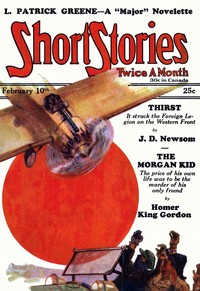
[Transcriber’s Note: This story appeared in the February 10, 1929 issue of Short Stories Magazine.]

Frank Richardson Pierce opens his story Code with a precise, atmospheric detail: the barometer is dropping. That falling glass sets the stage for a confrontation between two captains who share a profession but oppose each other by law. The prose is lean, favoring short, declarative sentences and dialogue that reveals character through what is left unsaid. When Captain McNulty of the rum runner Crayton tells his owner, “I am a sailor first,” he is not boasting but stating a creed that will govern every choice he makes. Pierce builds tension not through elaborate description but through the weight of a single word—code—and the stubbornness it implies.

Diction and the Weight of a Single Word

The title Code is not merely a label; it is the story's organizing principle. Pierce uses the word sparingly but with precision. When McNulty reminds Pritt that “there are certain codes a real sailor never forgets,” the word carries a double meaning: the unwritten laws of seamanship and the personal honor that binds a captain to his ship. The author does not explain or moralize; he lets the word resonate through action. Later, when Pritt reflects that sailors are “all the same, respecting codes time had handed down,” the repetition reinforces the idea that this code is inherited, not invented. Pierce's diction is deliberately plain—scowled, growled, clipped—matching the gruffness of his characters. He avoids nautical jargon except where it serves the scene, such as crow’s-nest and twelve mile limit, grounding the reader in the physical world of the ship without overwhelming them.

Dialogue as a Tool of Character and Conflict

Pierce's dialogue is terse and functional, revealing power dynamics and internal tensions. McNulty's clipped words to Pritt—“Let me remind you, sir, I am a sailor first”—carry a threat beneath the courtesy. The sir is a formal barrier, not a mark of respect. Pritt's interruptions and suggestions are met with scowls and fierce retorts; the dialogue shows two men speaking different languages: one of profit, one of duty. The lookout's “monotonous voice” reporting the cutter's position contrasts with McNulty's growled retort, emphasizing the routine tension of the chase. Pierce also uses silence: when Pritt “watched the coast line slip over the horizon,” the absence of dialogue underscores his isolation from the crew's world. The author trusts the reader to infer meaning from what is said—and what is not.

Setting and Sensory Details That Shape the Narrative

The Pacific coast is not a backdrop but an active force in the story. Pierce establishes the setting through sensory details: the dropping glass, the black horizon, the men making things secure. The weather report predicting a “bad blow” is dismissed by McNulty, who trusts his own sense of the air. This distrust of technology in favor of instinct is a key character trait. The physical details of the ships—the cutter riding light, the rum runner loaded deep—create a tactical contrast that drives the plot. Pierce also uses the sea as a moral arena: when Pritt suggests running in after the cutter shelters, McNulty refuses, saying “a man needs room in bad weather.” The reef is a real danger, but the captain's refusal is also about honor. The setting, from the crow’s-nest to the bridge, is rendered with enough specificity to feel authentic without slowing the pace.

Structure and the Unfolding of a Moral Standoff

Pierce structures the opening as a series of escalating pressures: the cutter's appearance, the weather report, Pritt's impatience. Each element tightens the screw. The author uses short paragraphs and frequent line breaks to create a staccato rhythm that mirrors the tension on deck. The point of view shifts between McNulty and Pritt, allowing the reader to see the conflict from both sides—the captain's code versus the owner's pragmatism. The story's title is not explained but demonstrated through McNulty's actions: he puts to sea not out of fear but out of principle. The structure builds toward a confrontation that is as much about character as about cargo. Pierce leaves the outcome uncertain, focusing instead on the moment when two codes—the law and the mariner's tradition—collide in a single decision.

The Role of the Coast Guard Captain as a Mirror

Old Wold, skipper of the cutter Chinook, appears only briefly but serves as a foil to McNulty. Pierce describes him as familiar with “all of the tricks in the book” and unable to be “deceived nor bought.” This parallel between the two captains—both old school, both stubborn—suggests that the code transcends sides. Wold's belief that “a pitcher could and would come to the well once too often” is a proverb that applies equally to the smuggler and the lawman. By giving Wold a voice, even in summary, Pierce hints that the conflict is not between good and evil but between two men who respect the same traditions. The author does not develop Wold further in the excerpt, but his presence establishes a symmetry that enriches the moral landscape of the story.

Pierce's Code is a story that earns its title through action and restraint. Readers will find no grand speeches or easy villains; instead, the narrative moves by implication, trusting the reader to recognize the weight of a captain's word. Pay attention to what the characters do not say—the silences, the scowls, the clipped replies—as much as to the falling glass and the black horizon. The code is not explained; it is lived.

Rereading Code — Edition Insights, I kept thinking about that moment when the glass falls, and the storm begins. It reminded me of another book where the sea’s vastness forces a quieter reckoning, where the real voyage happens inside. There’s a gentleness in that solitude, a long way from the captains’ stubborn duel. Wide Courses — Text and Context lingers in my mind like a distant bell, echoing that same unspoken weight.

There are no reviews for this eBook.

0
0 out of 5 (0 User reviews )

Add a Review

Your Rating *
  • ...
    Brittney Oconnell - 3 weeks ago
    A disappointing sequel that fails to recapture the magic of its predecessor. The plot is convoluted, with too many threads that go nowhere. The characters, including returning ones, seem to have regressed or become caricatures. The technical jargon is even more overbearing, and the pacing is off. It's as if a great idea was stretched thin. I recommend stopping after the first book.

  • ...
    Emma Brenda Cowan - 1 week ago
    An engaging sequel that builds on the original's events. The action is well-choreographed, and some new characters add freshness. However, the plot relies a bit too heavily on coincidences, and the final act feels rushed. Still, fans of the series will be satisfied with the continuation. A solid, if not groundbreaking, addition.

  • ...
    James Chen - 1 week ago
    A stellar follow-up that deepens the intrigue and raises the stakes. The pacing is relentless, and the plot is filled with unexpected twists that kept me riveted. The author strikes a perfect balance between technical detail and character development. The moral dilemmas presented are thought-provoking. If you liked the first book, you'll love this one. Absolutely unputdownable!


Reader reflection

Record your reading impressions

A brief reflection can help important ideas stay with you longer.

Your progress 0 / 10
1

Which reading stage best describes you?

2

Was reading this book enjoyable?

3

Is this a title you would suggest to others?

4

How much effort did this book require?

Related eBooks