About 46 minutes
Salvage—extra special — Key Ideas to Explore
Sea Voyages
10,565 recorded words. 4 minutes difference from this book's estimate.
View Gutenberg source #75075
The source record for Assignats — Reading Companion measures this digital text at 9,479 words, 42 min estimated reading time, and 1 detected text section.
The text analysis averages about 11.6 words per sentence, while the detected sections provide another way to judge how the source is divided.
Project Gutenberg metadata also associates the work with “Short stories,” connecting these edition facts with the source record’s subject description.
Explore this collection
These alternatives are selected using recorded categories and estimated reading time.
About 46 minutes
Sea Voyages
10,565 recorded words. 4 minutes difference from this book's estimate.
View Gutenberg source #75075About 47 minutes
Sea Voyages
10,596 recorded words. 5 minutes difference from this book's estimate.
View Gutenberg source #73244About 30 minutes
Sea Voyages
6,691 recorded words. 12 minutes difference from this book's estimate.
View Gutenberg source #76958Search stored excerpts and compare books → Choose by your preferences →
Choices use stored catalog measurements. Estimates vary with reading speed. A shared category is a catalog label, not a claim that two books have the same argument or literary quality.
Search reads excerpt text stored with this catalog and links to its associated Gutenberg record. The connection is stored in the site database; this tool does not recheck that every excerpt is word-for-word identical to that external record. Excerpt search does not cover every chapter and does not verify historical publication dates.
Catalog snapshot checked: 2026-09-26. Coverage: 95 public books, 95 available source excerpts.
Calculated from edition completeness, EPUB availability, text structure and catalogue metadata. Not a user rating.
Total of 100 points, scaled to a 2.5-5.0 range. Editions with an empty description or a missing EPUB file are not scored.
Public-domain source text
The source text is kept in the dedicated reader, separate from this catalogue record and its commentary.
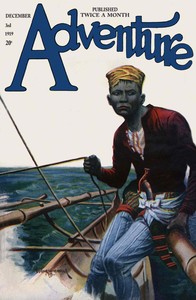
The story opens on a beach at Novgorod, where three ragged men sit staring over the Japan Sea. Ivan Alexandrovski, a Russian with a "great spade-shaped beard" and a chest full of medals, offers them a ship. The vessel, the Shongpong, flies a Chinese flag but carries a loyal Russian crew and a cargo of caravan tea destined for Victoria, on Vancouver Island. The trio—Micky McMasters, Red Landyard, and Mike Monkey—accept, but their suspicions grow as the voyage proceeds.
The catalog lists this work under "Sea stories," "Smugglers -- Fiction," and "Mutiny -- Fiction." The excerpts, however, reveal a narrative centered on political conspiracy rather than smuggling or mutiny. The men are not smugglers but castaways; the conflict is not mutiny but a planned revolution. The catalog subjects only partially capture the story's actual focus.
Leverage distinguishes the three castaways through their speech patterns. Micky McMasters, the British skipper, drops his h's: "'Umber born—at Great Grimsby on the North Sea." Red Landyard, the American mate, speaks plainly: "The course is always east. I can tell by the sun." Mike Monkey, the Scottish engineer, uses Scots dialect: "Ah hae me doots" and "Ah hae noo doot." Ivan, the Russian, speaks in a formal, almost poetic manner: "Come with me!" and "You may come with us as a brother." These linguistic choices quickly establish each character's origin and social standing without explicit exposition.
The cargo of "caravan tea" is repeatedly mentioned but never seen. Ivan claims the tea must go to America, but Mike Monkey doubts it: "Ye always said it was tay. This looks like a tay party." The tea is a pretext; the real purpose is revealed when Ivan offers Micky a share in a billion-dollar scheme to raise a revolution in Canada and the United States. The catalog subject "Smugglers -- Fiction" suggests the tea might be contraband, but the excerpts indicate it is a cover for political subversion. The tea itself remains an unseen MacGuffin, driving the plot without ever being unpacked.
The story's setting shifts from the beach at Novgorod to the engine room of the Shongpong. The engine room is described in gritty detail: "flashing cranks of the cross-compound engines," "grease-lined ear," and "the point of the bayonet which crossed the sky over his head." The men are physically degraded—"skin was blistered," "callouses on their hands had become small cushions"—yet their "fighting fire in their eyes" remains. The atmosphere is one of constant surveillance: a sentry with a rifle watches them, and Ivan's "bulky form" appears in the companion. The setting reinforces the theme of entrapment and suspicion, as the castaways are both prisoners and potential co-conspirators.
Readers should attend to the way Leverage builds tension through dialogue and physical detail rather than action. The story's political dimension—a Bolshevik plot to raise a billion dollars in North America—emerges gradually, and the catalog subjects of smuggling and mutiny may mislead. The excerpts end before the plot's resolution, so the fate of the castaways and the success of the revolution remain unknown. The story rewards attention to dialect, setting, and the gap between what characters say and what they do.
That old Leverage story about the castaways and their cargo stayed with me long after the last page—something about how trust shifts on the water. It reminded me of another quiet favorite, Under Sail — Story, Setting & Ideas, which holds that same sense of men adrift, choosing who to believe. I still think about both on grey afternoons.
Create a short personal record of your experience with this book.