Salvage—extra special — Key Ideas to Explore

(2 User reviews)   349
In Category - Sea Voyages
Day, Holman, 1865-1935 Project Gutenberg 2025 Not confirmed
Short stories; Sea stories; Ship captains -- Fiction; Smuggling -- Fiction Readers of public-domain and historical texts
Project Gutenberg digital edition en

Edition facts

Words 10,565
Reading time 46 min
Text sections 2

For Salvage—extra special — Key Ideas to Explore, the stored edition analysis reports 10,565 words, 46 min estimated reading time, and 2 detected text sections.

The text analysis averages about 16.9 words per sentence, while the detected sections provide another way to judge how the source is divided.

Project Gutenberg metadata also associates the work with “Short stories,” connecting these edition facts with the source record’s subject description.

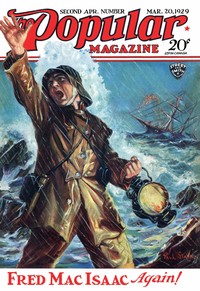
Holman Day's 1929 story follows Captain Rawson Bent of the coast-guard cutter Arrowsic as he intercepts a schooner whose master, Captain Coombs, resists rescue due to a stowaway woman and children, revealing a smuggling plot and a captain's moral dilemma.
Share
Editorial Edition Score 4.5/5

Calculated from edition completeness, EPUB availability, text structure and catalogue metadata. Not a user rating.

How this score is calculated
  • Description quality20 pts
  • Title & short description10 pts
  • Source metadata20 pts
  • Text length15 pts
  • Chapters / structure15 pts
  • EPUB file integrity20 pts

Total of 100 points, scaled to a 2.5-5.0 range. Editions with an empty description or a missing EPUB file are not scored.

Edition quality

Read the Text

ine snaked away behind the missile which shrieked its course over the disabled packet and plopped into the sea beyond, laying the line across the schooner’s waist.

“Very handsomely done, gunner!” shouted Captain Bent, glass at eye.

A moment later he cursed with all the power of his lungs, now damning something which was _not_ being done.

Before the line gun was fired he had taken note of such human figures as were visible aboard the schooner: a woman and three children were squatting on the after cabin; a man in oilskins, his face in the shadow of the scoop of a chin-lashed sou’wester, was sitting on the quarter-deck, his legs dangling over the break of the poop. He, the only man in sight, remained as motionless as the dingy figurehead showing under the packet’s sprit.

To be sure, Captain Bent had been apprised that lines from the beach had not been handled aboard the craft, but it was understandable that the services of a breeches buoy might not seem attractive, involving abandonment while a vessel was still riding to kedge. But here now was offered the rescue of souls and craft by a savior whose horizontally barred revenue flag guaranteed that the service would be rendered without salvage claim and free of towage cost.

Captain Bent’s intractable muscles yanked him into the quickstep which characterized his moments of mental stress. He danced to and fro along the bridge in a jig suggestive of carefree gayety. His tongue, however, discounted the supposition. He used up his stock of ordinary deep-water oaths and invented new ones on the spur of the crisis. And it surely was critical at that juncture! At any moment the _Arrowsic_ might crack her keel on the bottom of the porridge kettle.

Yonder, idly dangling his rubber boots against the poop sheathing, lounged an indifferent individual who ought to be scrambling to grab the line, at the same time howling his joy. Here was offered a free tow to safety, but an infernal fool was not lifting a hand to take the gift! What did it mean? Captain Bent was not guessing at the answer after his first rush of amazed emotion. He promptly cleared up all possible mystification in the subalterns on the cutter’s bridge.

He drove both fists in air and boomed, “Only another booze toter! He doesn’t want a show-up!”

Bent lunged to the dial and gave the engine room two bells and the jingle. The _Arrowsic_ frothed in reverse, clawing away from the hazards of the shoals.

“Mr. Todd, lay aboard there with six men!”

The executive officer, disdaining rungs, clasped the ladder’s brass rails and coasted to the deck.

He was followed by the captain’s shouted commands. “Haul aboard our gun line. Then get our hawser onto her fore bitts. Buoy her cables and slip ’em. And ask no questions aboard there, Mr. Todd! When we have towed her free of the rips we’ll heave to. Leave a couple of men as guards and bring her master to me on the cutter.”

The port sponson boat was dropped in the lee of the _Arrowsic_ as soon as she was swung to oppose her bulk to the crested seas.

A boatswain handily brought within reach the sagging heave line, using a boat hook, and then overhanded while the rowers slashed away toward the schooner.

Captain Bent, training his glass and observing details, found everything running true to form according to his prompt and previous estimate of the situation. The man on the packet dropped from the poop, waddled along the main deck and now actively handled the line which had been dropped across the waist.

But he was not helping to salvage.

He pulled in the weighted end, swung the slug around his head and heaved line and missile in the direction of the advancing boat. Not resting with this hint that he was declining assistance, he climbed into the fore shrouds and bellowed commands to fend off, shaking his fist to point up his orders.

For the cutter’s commander the affair had dropped into its expected and banal rut. Only another decrepit old lugger staggering down the coast with a load of rum! The prime zest of salvage adventure had oozed into the bilge of a hooch capture! Captain Bent was despising this performance, duty though it might be. In the affair his animosity had a keener edge because a disreputable hooker was dishonoring a clipper name after filching it from some hardy veteran’s yarns or memories.

The graduate from the clipper _Harvest Home_ growled anathema when he drove the binoculars back into the case slung across his breast.

Noting that the job was properly in progress, he went below and started a game of solitaire, banging his fist on the cards, scowling through the cigar smoke.

He could afford to take it easy and indulge his disgust, giving no personal attention to what was doing outside. The navigating lieutenant was fully capable of handling the ship; and the job of hauling drum cable to the schooner would be long and tedious.

Eventually the captain, cocking his ear toward the open skylight, heard sounds which revealed that his subalterns had again proved up as his apt pupils. Far away sounded the boatswain’s shrill pipe. The cutter’s whistle gruffly hooted acknowledgment of the signal. At once the deck winches began to rumble, showing that the cable had been run and made fast and was being shortened.

Captain Bent could visualize the scene outside. He heard the bell for half speed ahead; and the compass revealed that they were heading sou’west to get into steadier sea outside the tide rips.

After a time the _Arrowsic’s_ corkscrew motion ceased. She lifted and dipped with the long and slow rollers offshore. In this easier sea the sponson boat would be bringing to Captain Bent’s presence that stubborn barnacle pried loose from a lawless quarterdeck!

Captain Bent scuffled together the cards and dropped them into a drawer of the table. The cutter had been riding for some minutes, engine stilled, waiting for rowers to overhaul her.

The commander sat straight in his swivel chair, crossed his arms on his breast, allowed his visage to congeal.

In due course of time he heard Todd’s unmistakable _rat-te-tat_ on the door admitting from the ward room. Ah, reflected the chief, Mr. Todd knew what was what in the code of handling visitors! He was not granting to this rum skipper the courtesy of the companionway, allowing the pirate to profane the cutter’s quarter-deck.

When Captain Bent barked permission, the executive officer quickly opened the door and as quickly slammed it shut, allowing himself scant time for pushing in the man he had brought.

The cutter commander leaped to his feet, his jaw sagging with the effect of a sardonic grin, saying no word. He had no desire to speak. Nothing sensible in the way of talk at this moment occurred to him. How does one talk to a ghost? Or to a mentor disgraced? Or to an idol in the dust?

If this were truly a being of flesh and blood, this person who leaned against the closed door, the man was Captain York Coombs, once lord of the quarter-deck of the good ship _Harvest Home_. But because the man was saying nothing he persisted in his semblance of a phantom, if phantoms are able to “oil up”--a mariner phrase for rigging oneself in rubber boots, slicker and sou’wester.

Captain Bent’s recognition flashed to the conviction that this was Captain York Coombs, still alive, despite reports that he had died. On him was the print of the years between prime and old age.

But Captain Coombs was staring in his turn, without showing a sign of recognition. A lad had grown into a man whose rugged experiences had altered his aspect out of all semblance to the apprentice aboard the _Harvest Home_.

At once, memory working fast after the first surprise, the fact that Captain Coombs was saying nothing identified him more completely for the other’s comprehension.

Manifestly Captain Coombs’ feelings were wrought upon almost to extremity. Entering the cabin, his countenance had been an arabesque of distress and despair.

At times of great excitement, so Captain Bent remembered well, Captain York Coombs was overwhelmed by a distressing affliction. He was not merely a stammerer. In stress he was bereft of the power of speech. His breath was dammed back by the convulsive muscles of throat and pharynx.

In the present crisis he was as dumb as a gargoyle and his twisted features rendered him just as grotesquely ugly. He strove to bring his jaws together so that he might have recourse to one remedy for a stammerer; but he merely wagged his head, unable to whistle. With the manner of a drumming cock partridge he flailed his breast with his arms. He pointed to his gaping mouth and with a mighty explosion of breath managed at last to hoot, “Hit me!”

Memory flipped another page in the absolute identification of this man as York Coombs. Often on the _Harvest Home_ Apprentice Bent had seen the chief officer restore speech to the stricken captain at a distressing juncture, when, for example, the crew was making a botch of tacking ship in a gale. By request the first mate would land a hearty punch in the region of the master’s solar plexus, and the shock or the indignity or something connected with the assault always started the captain’s vocal machinery into smooth operation.

Captain Bent was a willing volunteer in this instance. In his alacrity he disliked to think that he was grabbing an opportunity to pay back for larrupings. But Captain Coombs was in a confessedly pitiful plight; he wanted to talk something off his mind, evidently. And he had commanded one who had been used to his commands on the _Harvest Home_. Captain Bent obeyed with ardor.

He set palm on the table between the two, vaulted across the obstruction and, with plenty of momentum behind his fist, drove a blow against the breast and, for extra measure, landed a stiff punch under the ear of Captain York Coombs, who was knocked off his feet and was launched through a stateroom door, where he lay prone for a moment until a heave of the ship rolled his soggy body under a berth. As Coombs himself would have phrased it, the order was executed A-1, seamanlike and shipshape.

Captain Bent strode to his victim, grabbed the rubber-booted legs, and hauled the former lord and master out into the middle of the cabin, standing over him with doubled fists while Coombs blinked filmed eyes, recovering his senses. He also recovered the power of speech--along with handsome recollection of his entire glossary of sea oaths.

He sandwiched a slab or two of meaty comment between thick slices of profanity.

“Knocking me bedockity-blue galley west. Celebrating my come-uppance, be ye? Go ahead and kick me around the deck to the tune of ‘Blow the Man Down.’ Make it a good celebration while you’re at it.” He grunted to a sitting posture and glared from under the sou’wester scoop.

Captain Bent propped himself with hands on knees, leaned over and returned the savage stare.

“Captain York Coombs of the _Harvest Home_, I believe!”

“I’m answering to that hail, damn yeh!”

“I am referring to full-rigger _Harvest Home_.”

“Shan’t admit that last.”

“It’ll be owning up to too much of a comedown.”

“Well, you don’t have to admit it, not in my case. You don’t remember me, eh?”

“Not from Adam.” The old man set the ball of his thumb beneath the angle of his jaw and groaned. “What’s your grudge against me, outside o’ me swearing you into State prison for a murder I done myself?”

“I sailed apprentice with you; and it’s easy, of course, for a captain to forget an----”

Coombs flapped his hand and grunted, “Mebbe you’ve said enough for me to understand what that poke meant.”

“You taught me to jump in obeying orders, sir. You’ll have to split the blame if so be it that I hit you extra hard.”

Captain Coombs’ mouth twisted dryly. “I must ’a’ tooken extra pains teaching _you_.”

“You did, sir. Very extra the pains were. I carry marks of them. But I’m calling the score squared. Let’s see! I’m forty. Well, sir, for twenty-five years I have been lugging the hankering to hit you. Hereafter, I’ll never wake up in the night and worry about that hankering. My mind will be easy from now on. Thank you, sir, for coming aboard and giving me my chance.”

Bent straightened and walked back to his chair.

Captain Coombs rolled to his knees and stiffly arose. “I’m glad to find a small favor so much appreciated. What may I call your name?”

“I don’t ricolleck no sech name. But I’ve jettisoned out of my mind a lot o’ sculch, including names of apprentices. So you’ve paid me back, hey? Well, I’ll pass you a receipt by saying I won’t never again forget Captain Rawson Bent.”

The cutter commander crossed his forearms on the table and leaned forward. “However, Captain Coombs, I haven’t settled in full with you, sir. I haven’t paid for the training that made a sailor of me, a mariner with true notions of what the sea means. Also, I haven’t squared with you for saving my life one time when I disobeyed orders and went swimming in shark waters. I’m reminding you of how you jumped in, kicked away the sharks, got me aboard and used up on me the rest of your stock of kicks, racing me up and down the main deck.”

Captain Coombs rolled up his eyes, and scratched his ear, tipping the sou’wester. “I’m beginning to get a little glimmer of rickollection about you.”

“You may remember, sir, when your nursing saved me from dying of scurvy that time we were dismasted by a typhoon and worked ship with jury rig all the weeks till we made one of the Tonga group and grabbed some God-given green stuff.”

Captain Coombs brought his gaze down and winked a puckered eye with queer solemnity. “Edzackly!” he admitted. It was Yankee reserve, its laconic style extra copper-riveted by mariner stolidity.

Captain Bent went brusquely back to the business of day and date. “Sir, we’ll lay off grappling in muddy waters. We’ll tackle present concerns. In a friendly way, however--if I did put too much steam behind that punch.”

Captain Coombs snorted and tossed his hand, dismissing the subject. “Oh, hell! That’s only the style of seafaring men understanding each other. Much obleeged for your help in getting the hatch open on the cargo of gab I’m carrying. Sir, you can size me up pretty well, seeing the hooker I’m skippering. Cap’n Bent, I’ve come down awfully in the world.” It was said with a quaver in the tones.

The old man obeyed the younger captain’s gesture and slumped into a chair beside the table.

“Yes, I have sized you up, Captain Coombs. Your actions have been enough for me. Your packet has a cargo of hooch.”

The other nodded with hopeless chin sag. “Thanks! I’m saved that much gab.”

“But I want you to say _something_ about it,” commanded Bent, his eyes narrowing.

“My story won’t be believed in court. Telling it to a coast-guarder will only be like hooting into an empty scuttlebutt.”

“But not in the case of this coast-guarder, sir. Captain Coombs, I knew you before I was a coast-guarder. Your ship was always teetotally dry. You hated liquor.”

“Aye, and the older I’ve growed, the wuss I’ve hated the stuff. But tow me in. Hand me over. Land me in court. When I’m on the stand I’ll work myself into one of my dumb fits so I can’t yip a word. I’d ruther be lampblacked as a pirut than whitewashed as a damnation boob. I have come down in the world, sir, but I’ve been hanging onto some certain things in a master mariner’s pride. I can go through with being a jailbird, but I’ll be cussed if I can live up under being a standing joke along this coast for the rest of my life.”

Captain Bent slowly put in eclipse his insignia. He removed his cap and rolled up the cuffs of his coat to conceal the stripes. Sociably, mariner to mariner, with convincing sympathy in tone and expression, he invited, “Go on and spin the yarn, old-timer.”

“I get ye! I ain’t talking to a coast-guarder right now! Here’s what, then--making story cable mighty short. My bills of lading show two hundred and fifty cases of canned clams, two dozen to a case, sealed, labeled proper, cases and cans; Jeth Wallace’s regular labels and stenciling--he being known as a canner who ships regular.”

“More convincing than labels and stencils must be the reputation of Captain York Coombs as a teetotal skipper,” put in Captain Bent with vigor.

The old man bounced in the chair. He shouted in his passion of innocence. He beat his fists on his breast in his apprehension that emotion might make him voiceless without these mechanics.

“That’s what the jeemro, jass-heif-ered dunkaboos reckoned on when I was chartered for this trip. They must have got to Jeth Wallace good and proper--bribed up him and his cannery, run in their rum between days and laid low while Jeth and some hand-picked whelps put the stuff up to look as in-nercent as Miss Daisy teaching a Sunday-school class. And here I’m handling the first cargo loaded off’n Dumbo, and, by the blue-gilled sculpin, till I reached off Popham Sands I was just as innercent as Miss Daisy herself.”

He had blown from his soul the hateful chaff of confession in an unbroken exhaust of breath, racing his speech before fury could again throttle him.

Captain Bent relighted his cigar, venturing no trigging comment while the old man once more charged his lungs.

“My mate, the cook and the two hands forrards, one and all, they sure have a hound’s nose for spotting rum through wood and tin. Else they had a tip. Anyways, they got into that cargo, sneaking below one after the other in relay trips, and the first I reelized any o’ their rigging was slack they was drunker’n pipcats and they didn’t know whuther they was reeling in clotheslines or handling tackle, and so the forrard hamper was slatted away and I couldn’t handle ship in the seaway and I had to work single-handed, myself, getting killicks hooked.”

“I noticed that for a shipshape, A-1 job. It was sign of an able mariner, sir.”

“I have tried hard all my life to be A-1,” mourned Captain Coombs. “But, blast it, I didn’t find others that way when I give up the sea and settled ashore. The landsharks, the gougers and the flimflammers flocked around me like gulls around a Lumbo fish house at gutting time. They have nigh dreened me, sir. I foreclosed for money I had lent on that old hooker you’re taking in tow and I refitted her as best I could. For luck and old times’ sake I renamed her the _Harvest Home_. It’s an awful comedown, libeled now for rum-toting, taking two honest names into court.”

“That clipper name has been a pleasant memory for me,” admitted Captain Bent conservatively.

“In spite of the lickings?” inquired the old master, cocking his eye.

“Yes; they had their part in teaching me to respect orders, making me understand as master what orders mean aboard ship.” There was a hint of tenderness in the tone. Instantly he became brusque again. “I saw none of your crew on deck, sir.”

“Their minds ain’t edzackly on seafaring at the present time,” stated Captain Coombs demurely. “I didn’t want any of the poor fellers to miss footing and tumble overboard,” he went on, cooing his words. “They was pretty sleepy, anyway. But I took no chances. I fixed it so they’re sleeping all calm and sweet, like babies. I used a belaying pin.”

The two captains looked at each other, neither showing as much as the glint of a smile.

Holman Day's "Salvage—extra special" opens with the coast-guard cutter Arrowsic returning from iceberg patrol to Maine waters, where Captain Rawson Bent receives orders that prompt a "queer little jig"—a rare physical display from a man whose "countenance" remains "stonily stern." The story immediately establishes a tension between duty and personal history: Bent's muscles have been unruly since a near-fatal fall into icy Alaskan water years earlier, a detail that hints at past trauma without explaining it fully.

The narrative quickly shifts to a salvage operation when a schooner, the Harvest Home, is reported in distress. But the crew behaves oddly, failing to handle rescue lines. The excerpt reveals that the schooner's master, Captain Coombs, is an old acquaintance of Bent's, and that a woman and children are aboard as stowaways. Day's dialogue-driven prose captures the clipped, professional exchanges between the two captains, undercut by Coombs's mournful confessions about his financial ruin and the "sour plums" of his situation.

A Captain's Unruly Body and Past

Day invests Captain Bent with a physical history that complicates his authority. The narrator notes that Bent's "muscles were unruly ever since he had spent a half-hour in icy Alaskan water after wind-lashed boat tackle had knocked him off the cutter Bear." This detail is not elaborated—the excerpt offers no further account of that incident—but it colors Bent's movements, such as the "queer little jig" he performs when receiving orders. The story thus suggests that a seaman's body bears the marks of past service, even when his face remains impassive.

Bent's reaction to the Harvest Home's former name, a clipper ship he once served on, adds another layer: he admits the name is "a pleasant memory" despite the "lickings" he received aboard her, which taught him "to respect orders." This blend of physical memory and professional discipline gives Bent a depth beyond the typical coast-guard captain. Day uses these brief references to imply a backstory without halting the present action.

Dialogue as a Tool for Character and Conflict

The excerpt relies heavily on dialogue to advance the plot and reveal character. Captain Coombs's speech is marked by nautical jargon and a self-deprecating, almost theatrical lament: "I have tried hard all my life to be A-1," he mourns, but "the landsharks, the gougers and the flimflammers flocked around me like gulls around a Lumbo fish house at gutting time." His use of "projick" for "project" and "dreened" for "drained" gives him a distinct vernacular voice.

Bent's responses are terse and measured, contrasting with Coombs's volubility. When Coombs admits he knocked his crew unconscious with a belaying pin to keep them safe, Bent replies dryly: "The shipping laws these days oblige us to be very considerate in treatment of men before the mast." The humor is understated, and neither captain smiles. Day thus builds tension through what is said—and what is left unsaid—between two men who share a professional history but are now on opposite sides of the law.

The Stowaway Woman as a Complication

The woman and children aboard the Harvest Home are introduced as a complication that shifts the story from a simple salvage to a moral and legal tangle. Coombs explains that the woman is "Jeth Wallace's wife" and that she stowed away with her children to escape her husband, whom she claims has "sold his soul to Satan." She now threatens Coombs with two options: either surrender the ship and cargo to prohibition agents, or face a false accusation of elopement.

Bent dismisses the threat—"Nobody would take stock in such a yarn!"—but Coombs insists on the power of gossip along the coast: "against her tongue—it's a lively one—I don't stand the show of an el'funt trying to dance a jig on the dogvane!" The woman's motives and the full nature of Jeth Wallace's dealings are not revealed in the excerpt, leaving the reader to infer that the story will hinge on how Bent resolves this standoff. Day uses the stowaway to introduce themes of reputation, coercion, and the limits of maritime law.

Readers should attend to how Day balances the technical details of coast-guard procedure with the personal histories of his characters. The excerpt offers only fragments of Bent's past and Coombs's troubles, but these fragments are carefully placed to create a sense of lived experience. The story's title, "Salvage—extra special," hints at a reward beyond the material—perhaps the recovery of a man's honor or the resolution of an old debt. The incomplete text leaves these possibilities open, inviting speculation about how Bent will navigate the conflicting demands of duty, friendship, and justice.

Sometimes a story leaves behind a particular ache—Rawson Bent’s quiet judgment of Coombs’ choices stayed with me like tidewater. That same moral weight, the slow pull between duty and mercy, surfaced again when I turned through Afloat and Ashore: A Sea Tale — A Reader’s Guide. Both feel like old letters from men who knew the sea’s long silences.

Amelia Walker
2 weeks ago

Emma Brown
2 weeks ago

4
4 out of 5 (2 User reviews )

Add a Review

Your Rating *
  • ...
    Victoria Walker - 4 weeks ago
    {'rating': 2, 'text': "Despite the intriguing title, I found this book to be rather dry and lacking in narrative drive. The author seems more focused on technical details than on crafting engaging stories, and as a result, the prose often reads like a manual rather than entertainment. The characters are underdeveloped, and the emotional stakes are never fully realized. While the subject matter is interesting, the execution fails to make it compelling. It may appeal to hard-core salvage professionals, but for the average reader, it's a tedious read."}

  • ...
    Dale Andrews - 2 weeks ago
    {'rating': 5, 'text': "This is an outstanding collection of stories that truly captures the spirit of salvage operations at sea. The author's firsthand experience shines through in the vivid, authentic descriptions of maritime rescue attempts. Each story is gripping and filled with high-stakes drama, showcasing the bravery and skill of the salvage crews. The technical details are fascinating without being overwhelming, making it a perfect read for both maritime enthusiasts and general readers. I couldn't put it down! A must-read for anyone who loves the sea and true adventure."}

  • ...
    Kevin Perry - 1 week ago
    {'rating': 3, 'text': "Salvageextra Special offers a unique glimpse into the world of maritime salvage, and the author's expertise is evident. The stories are well-researched and provide interesting insights into the challenges of underwater recovery. However, the pacing can be uneven, with some stories dragging in technical explanations that might lose the casual reader. Still, if you're interested in nautical history and rescue operations, this book has plenty to offer. It's a worthwhile read with some truly memorable moments."}


Reader reflection

What was your reading experience?

Capture what you thought, learned, and would like to remember.

Your progress 0 / 10
1

Which reading stage best describes you?

2

Was reading this book enjoyable?

3

Would you encourage someone else to read it?

4

How easy was the book to follow?

Related eBooks