The Wreck of the Corsaire — Edition Insights

(2 User reviews)   325
Russell, William Clark, 1844-1911 Project Gutenberg 2020 Not confirmed
Sea stories; Shipwrecks -- Fiction Readers of public-domain and historical texts
Project Gutenberg digital edition en

Edition facts

Words 24,557
Reading time 107 min
Text sections 3

The Wreck of the Corsaire — Edition Insights can be approached with a clearer sense of reading commitment from its source measurements: 24,557 words, 1 hr 47 min estimated reading time, and 3 detected text sections.

The text analysis averages about 26.3 words per sentence, while the detected sections provide another way to judge how the source is divided.

Project Gutenberg metadata also associates the work with “Sea stories,” connecting these edition facts with the source record’s subject description.

A passenger aboard the Indiaman Ruby survives shipwreck and boards the derelict privateer Corsaire, discovering a chest of gold and brick-shaped bullion. The narrative contrasts the orderly world of the Ruby with the eerie stillness of the wreck, focusing on the narrator's physical and psychological isolation.
Share
Editorial Edition Score 4.5/5

Calculated from edition completeness, EPUB availability, text structure and catalogue metadata. Not a user rating.

How this score is calculated
  • Description quality20 pts
  • Title & short description10 pts
  • Source metadata20 pts
  • Text length15 pts
  • Chapters / structure15 pts
  • EPUB file integrity20 pts

Total of 100 points, scaled to a 2.5-5.0 range. Editions with an empty description or a missing EPUB file are not scored.

Edition quality

Read the Text

bin passengers in all, and we had a poopful, as you will suppose. There were more than a dozen girls, dark and fair, most of them pretty enough. There were a few young married ladies too and a little mob of dignified mammas. The men were of the old-fashioned mixture, a few military officers, a sprinkling of Civil Service young gentlemen, fierce old men with white whiskers and gleaming eyes, with peppercorns for livers and with a capacity of putting on the tender aspects of Bengal tigers when anything went wrong--merchants, judges, planters--I can scarce remember now what they were. There were lanterns enough to make a bright light and some of them being of colored glass threw bars of ruby and of emerald against the yellow radiance of the clear flame and the ivory streaks of moonlight. Far aft was the wheel with the brass upon it reflecting the lustre till it glowed out against the blackness over the stern like a circle of dull fire upon the liquid obscurity. Grasping the spokes of it was the figure of a seaman, smartly apparelled in flowing duck and a grass hat on “nine hairs”; his shape, dim in the distance, floated up and down against a bright star or two; but there was little need for him to keep his eye on the course. The calm was dead as dead could be. Half-an-hour since the ship’s head was northwest and now it was west, and the swell was under the bow with a strange melancholy sob of water breaking into the pauses betwixt the music and sounding like the sigh of a weeping giant somewhere in the blackness over the side.

And black the water was spite of the air being brimful of the soft silver of the moonlight. On either hand the planet’s wake the ocean ran in ebony to the indigo of the night sky; but you only needed to steal to the break of the poop clear of the awning to mark how gloriously the luminary was limning the ship as if she had no magic for the deep that night. Every sail was a square of pearl, every shroud and backstay, every brace and halliard a rope of silver wire; the yards of ivory, with hundreds of stars of moonlight splendor sparkling and flashing in the dew along the rails. The Jacks had rigged up lanterns forward and were cutting capers on the forecastle and in the waist to some queer music that was coming out of the darkness upon the booms. It was strange enough to see their whiskered faces revolving in the weak, illusive light, to witness apparitions of knobs and warts and wrinkles storm-darkened to the hue of the shell of a walnut showing out for an instant to the glare of a lantern. There was great laughter that way and a jovial growling of voices. I believe the sailors had got, with the captain’s leave, some of the women of the steerage passengers to dance with, and their happiness was very great; for give Jack a fiddle, and a girl to twirl to the sawing of it, and a drink of rum and water to fill up the short measures for his breathing-times, and he will ask for no other paradise ashore or afloat.

Much was made of old Captain Bow. He looked as if he had taken all day to dress himself, so skewered was he in a garb of the old school; tail-coat, a frill, a collar half-way the height of the back of his head, buff waistcoat, tight pantaloons, shoes like pumps, and a heavy ground-tackle of seals dangling from the rim of his vest.

“Captain shows nobly to-night, sir,” said the chief mate to me.

“Ay!” said I, “little enough of the salt in _him_ you’d think.”

“He dances well enough for an old shellback,” said the mate. “A man needs a ship for a dancing-master to teach him how to spread his toes as the Captain does.”

“Aren’t you dancing?” I asked.

“No, it’s my watch on deck. I’ve got the ship to look after. But it’s little watching she wants. Oh, blow, my sweet breeze, blow!” he whispered, with a pensive cock of his eye at the sea through a space between the flags. “It isn’t to be the only birthday aboard us, I allow, Mr. Catesby. If the cockroaches below aren’t celebrating some festival of their own, then are we manned with marines, sir. Phew! the Hooghley of a dead night with bodies foul of the cable and the gangway ladder is a joke to this. What’s become of the wind? What’s become of the wind?” and he stole away to the wheel softly whistling between his teeth.

It was too sultry to eat; the very drink you got was so warm that you swallowed it only for thirst, and put down the glass with a sort of loathing. When I took a peep through the after skylight and saw the tables laid out for supper for the special birthday feast that was to be eaten, my tongue clave to the roof of my mouth, and I felt as if I should never be able to eat another blessed morsel of food this side the grave. Every dish looked exhausted with perspiration; the hams were melting, the fowls shone like varnish, much that had come solid to the table was now fluid. However I was one of the committee and it would not do for me to be absent, so when the bell rang to announce supper and the music stopped, I stepped up to the wife of a colonel and, giving her my arm, fell in with the procession and entered the cabin.

It is a picture I need but close my eyes to vividly witness anew. There were two tables, one athwartships well aft, and the other running pretty nearly down the whole length of the cabin. The interior was lighted with elegant silver lamps, and along the length of the ceiling there was a plentiful embellishment of ferns, goldfish in globes, and so forth. On either hand went a range of berths, the bulkheads richly inlaid, the panels hand-painted, and there was many another little touch full of grace and taste. Far aft, at the centre of the athwartship table--his quaint, old-fashioned figure showing like a cameo upon the dull ground of the bulkhead behind him--sat the captain, talking to right and left, with a dry, kind smile lying wrinkled upon his face like the meshes of a South African spider’s web. On either side of him went a row of passengers, and on down to the foot of the table that was over against the cuddy front. The ladies’ dresses were handsome; we were a rich assemblage of folks for the most part, and had thoroughly overhauled our wardrobes that we might do fitting honor to this very interesting occasion. Jewels sparkled in white ears, and upon white wrists and fingers. We were not lacking in turbans and feathers, in thick gold chains, immense brooches bearing the heads of the living or of the departed. There was much popping of champagne corks, much rushing about of stewards, much laughter, and a busy undertone of talk. The memory of the picture dwells in me with an odd pertinacity. I had shared in more than one festive scene on board ship in my time, but in none do I recall the significance which the framework of vast ocean solitude outside, of the deep mystery of the wide moonlit shadow, and the oppressive peace of the tropical night, communicated to this one. It might have been the number of the folks assembled; their gay, and in many instances, even splendid attire, the essentially shore-going qualities of the merry-making, clearly defining themselves in the heart of the deep--like the sight of a house in a flood. In fact the scene completely dominated all ship-board habits, and the thoughts which grew out of them. It made every heave of the fabric upon the weak, black, invisible swell a sort of wonder, as though some novel element were introduced; the familiar creak of a bulkhead, the faint jar of the rudder upon its post made one start as one would to such things ashore.

“You are refusing everything the stewards offer you, Mr. Catesby,” said the colonel’s lady by my side. “You are in love.”

“I am in a fever, madam,” I replied: “the tropics usually affect me as a profound passion. In fact I feel as if I could drown myself.”

“Why make a voyage to India, then, Mr. Catesby? Is there not the North-West Passage left to explore, with the great Arctic Circle to keep ye cool?”

“Madam,” said I, “I perceive your husband in the act of rising to make a speech.”

A short, fiery-faced Irishman, with whiskers like silver wires projecting cat-like from his cheeks, stood up to propose the captain’s health. Glasses were filled, and the little colonel blazed away. When he had made an end (old Bow steadfastly watching him all the while with a smile of mingled incredulity and delight), the skipper’s health was drunk with cheers and to the song of “He’s a jolly good fellow,” the air of which was caught up by the ship’s company forward, and re-echoed to the cuddy with hurricane lungs from the forecastle. Then old Bow rose straight and unbending in his tightly-buttoned coat on to his thin shanks; but at that moment there was a movement of a little group of the stewards at my end of the table; the colonel’s lady by my side was whispering with animation to what was in those days called a “griffin,” a handsome young fellow seated on her left; and being half dead with heat, and in no temper to listen to old Bow, whose preliminary coughs and slow gaze around the table threatened a very heavy bestowal of tediousness, I slipped off my chair, sneaked through the jumble of stewards, and in a moment was ascending the poop ladder, breathing with delight the night atmosphere of the sea, that tasted cold as a draught of mountain water after the hot, food-flavored air of the cuddy.

Forward the sailors had come to a stand, and were talking, smoking, drinking, and eating by the will-of-the-wisp glare of the few lanterns which hung that way. There was nobody aft, saving the helmsman and the second officer who had turned out to relieve the chief mate that he might join the supper party. He lay over the rail abreast of the wheel, and I could hear him quietly singing. The lanterns burnt brightly; against the brilliant atmospheric haze of moonshine to larboard--_larboard_ was then the word--the bunting which walled the poop glistened like oiled paper. The monotonous voice of old Bow was still returning thanks below; again and again his deep sea notes were broken by loud cheers. The life under decks, the speechifying and the huzzaing there, the brightness of the light, the frequent chink of glasses, put a wild sort of mocking look into the emptiness of this deck with its lanterns swaying to the roll of the ship, and the motionless figure of the steersman showing unreal, like some image of the fancy down at the end of the vessel, through the vista of bunting and kaleidoscopic light and white awning framing a star-studded square of dark ether over the taffrail.

Yet I still wanted air. The poop was smothered up with flags and canvas; the cross-jack was furled, spanker brailed up, and the mainsail hung from its yard in festoons to the grip of its gear. There was no wing of canvas therefore near the deck to fan a draught along, and so it came into my head to jump aloft and see what sort of coolness of dew and night were to be had in the maintop. I got on to the rail and laid hold of the main shrouds, and leisurely travelled up the ratlines. Methought it was as good as climbing a hill for the change of temperature the ascent gave me. The iron of the futtock shrouds went through and through me in a delicious chill, and with the smallest possible effort I swung myself over the rim of the top and stood upon the platform, rapturously drinking in the gushings of air which came in little gusts to my face out of the pendulum beat of the great maintopsail against the mast to the tender swing of the tall fabric.

If ever you need to know what a deep sense of loneliness is like, go aloft in a dead calm when the shadow of the night lies heavy upon the breathless ocean, and from the altitude of top, cross-tree or yard, look down and around you! The spirit of life is always strong in the breeze or in the gale of wind. There are voices in the rigging; there is the organ note of the billow flung foaming from the ship’s side; there is a tingling vitality in the long floating rushes of the fabric bursting through one head of yeast into another. All this is company, along with the spirit shapes of the loose scud flying wild, or the sociable procession of large, slow clouds. But up aloft in such a clock-calm as lay upon the deep that night you are _alone_! and the lonelier for the distant sounds which rise from the decks--the dim laugh, the faint call, liker to the memories of such things than the reality.

The body of the ship lay thin and long far beneath me like a black plank, pallid aft with the spread of awning, with an oblong haze of light in the main hatch where the grating was lifted, and dots of weak flame from the lanterns forward, resembling bulbous corposants hovering about the forecastle rail. The ship’s hull was complexioned to the aspect of the leaf of the silver tree when lighted by the stars by the broad raining of the moonshine. Yet, as she slightly rolled, breaking the black water from her side into ripples, you saw the phosphor starting and winking in the ebony profound there, like the reflection of sheet-lightning. Exquisitely lulling was the tender pinion-like flapping of the light, moonlit canvas, soaring spire-fashion in ivory spaces high above my head, with the pattering of dew falling from the cloths as they swayed. A sound of thin cheering from the cuddy floated to me; presently a fiddle struck up somewhere forwards, and a manly voice began _Tom Bowling_. Now, thought I, if they would only strip the poop of its awning, that I might see them dancing by the lantern light when supper was over, and they had fallen to caper-cutting afresh! What a scene of pigmy revelry _then_! What a vision of Lilliputian enjoyment!

I seated myself Lascar fashion and lighted a cigar. Could I have distin-guished the figure of a midshipman below I should have hailed him, and sent down the end of a line for a draught of seltzer and brandy. But the repose up here, the dewy coolness, the royal solitude of the still, majestic night, with sentinel stars drowsily winking along the sea-line, and the white planet of the moon sailing northwards into the west amid the wide eclipse of its own soft silver glory, were all that my fevered being could pray for.

It is as likely as not that after a little I was nodding somewhat drowsily. I recollect that my cigar went out, and that on sucking at it and finding it out I would not be at the trouble of lighting it again. I say I might have been half-asleep sitting, still Lascar fashion, with my back against the head of the lower-mast, when on a sudden, something--soft, indeed, but amazingly heavy--struck me full on the face and chest, and fell upon my knees, where it lay like a small feathered-bed. But for my back being supported, I must have been stretched at full length and, for all I know, knocked clean overboard, or, worse still, hurled headlong to the deck.

I was so confounded by the shock and the blow that for some moments I sat goggling the object that lay as lead upon my knees like a fool. I then threw it from me, and stood up. It fell where a slant of moonshine lay clear upon the side of the top, and I perceived that it was a big sea-bird, as large as a noddy, white as snow saving the margin of its wings, which were of a velvet black. It had a long, curved beak, and I gathered from the look of one of its pinions, which overlaid the body as though broken, that its width of wing must have come proportionally very near to that of the albatross. I could see by the moonshine that the eyes were closing by the slow drawing down of a white skin. The creature did not stir. I stood staring at it full five minutes, gripping the topmast rigging to provide against its rolling me out of the top should it rise suddenly and strike out with its wings, but there was no stir of life in it. It was then that I caught sight of something which seemed to glitter in the thick down upon its breast like a dewdrop on thistledown. It was a little square case of white metal, apparently a tobacco-box, secured to the bird’s neck. By this time the passengers had come up from supper, and were dancing again on the poop. I could see nothing for the awning, but the music was audible enough, and I could also catch the sliding sounds of feet travelling over the hard planks, and the gay laughter of hearts warmed by several toasts. The Jacks were also at work forward. An occasional note of tipsy merriment, I would think, rose up from that part of the ship; but there was no lack of earnestness in the toe and heeling there; the slap of the sailors’ feet upon the decks sounded like the clapping of hands; and I could just catch a glimpse of the figure of the fiddler in the obscurity which overlaid the booms quivering and swaying as he sawed, as though the noise he made was driving him crazy.

I seized the big bird by the legs and found its weight by no means so considerable as I should have supposed from the blow it dealt me. So, tightly binding its webbed feet with my pocket-handkerchief, that they might serve me as a handle, I dropped with this strange, dead sea-messenger through the wide square of the lubber’s hole into the main shrouds, and leisurely descended. The chief mate stood at the head of the starboard poop ladder as I reached the rail.

“Hillo!” he called out, “good sport there, Mr. Catesby. What star have you been shooting over pray? And what _is_ it may I ask? A _turkey_?”

A shout of this sort was enough to bring everybody running to look. The music ceased, the dancing abruptly stopped. In a moment I was surrounded by a crowd of ladies and gentlemen shoving and exclaiming as they gathered about the skylight upon which I had laid the big sea-fowl.

“What is it, Mr. Catesby? My stars! a handsome bird surely,” exclaimed Captain Bow.

“Oh, Captain,” cried a young lady, “is the beautiful creature dead really?”

“See!” shouted a military man, “the creature’s breast is decorated with a crucifix. No, damme, it’s a trick of the light. What is it, though?”

“A silver pouncebox, I declare,” exclaimed a tall, stout lady, with a knowing nod of the feather in her head.

“A sailor’s nickel tobacco-box more like, ma’am,” observed the mate, “with some castaway’s writing inside, or that bird’s a crocodile.”

“Let’s have the story of the thing, Mr. Catesby,” said the captain.

I briefly stated that I had ascended to the maintop to breathe the cool air up there and that whilst I was nodding the bird had dashed against me and fallen dead across my knees.

“Oh, how dreadful!” “Oh, how interesting!” “Oh, I wonder the fright didn’t make you faint, Mr. Catesby!” and so on, and so on from the young ladies.

“Shall I cast the seizing of the box adrift, sir?” said the mate.

“Ay,” responded the captain.

The narrator of The Wreck of the Corsaire is a man of independent means who has already made two long voyages—to Sydney and Melbourne, then to China—before booking passage on the Indiaman Ruby bound for Bombay. His stated plan to strike across Persia into Arabia and home via the Mediterranean suggests a restless curiosity rather than commercial purpose. The opening chapter establishes Captain Bow, a pale, weather-undarkened figure who resembles a print of Charles Lamb, as a seasoned mariner whose memory reaches back to John Company's ships and Commodore Dance's defeat of Linois. The ship's birthday celebration on 18 June sets a deceptively calm stage.

A Voice That Shifts Between Logbook and Meditation

The narrative voice moves fluidly between precise nautical observation and reflective musing. The opening description of the sea at sundown—"a surface of quicksilver through which there ran a light, wide, long-drawn heave of swell, regular as a respiration"—is both technical and lyrical. Later, when the narrator examines the wreck's hold, he notes the "sit of the wreck upon the water" and the arrangement of "white wooden cases, with here and there canvas bales," but his attention drifts to the "strange indifference" with which he regards the gold. This alternation between concrete detail and inward speculation gives the prose a distinctive rhythm, as though the narrator is simultaneously reporting and wondering at his own reactions.

The Wreck as a Stage for Solitary Observation

Once aboard the derelict Corsaire, the narrator's world shrinks to the deck and cabin of a single vessel. He rigs a cotton umbrella against the sun, sits under it with a telescope, and sweeps the horizon. The silence is broken only by the "languid air" and the "brassy glory" of the central heavens. His actions are methodical: he cuts rope strands to secure the umbrella, peers into the hold, lifts hatch-covers. Yet the wreck itself resists easy interpretation. The chest of gold and brick-shaped bullion is found, but the narrator does not celebrate; he "dully mused on it," concluding it was "the privateersman's sorted plunder." The wreck offers no rescue, only objects that prompt speculation.

Treasure That Fails to Drive the Plot

The discovery of gold—both coin in a tray and rough, brick-shaped lumps beneath—might in another sea story trigger a race for salvage or a moral crisis. Here, the narrator's response is notably flat. He exerts himself to lift the tray, notes the weight of the bricks, then slides the tray back and closes the lid. The excitement "rapidly died away." He turns instead to practical concerns: finding a chair, an umbrella, a telescope. The treasure is present but inert, a detail that underscores the narrator's isolation. Without a crew to share the find or a villain to contest it, the gold becomes one more object in a derelict space, no more urgent than the "great cotton umbrella, grimy and wet."

The Catalog Subjects and What the Excerpts Actually Show

The catalog lists this work under "Sea stories" and "Shipwrecks -- Fiction." The excerpts do contain a shipwreck—the narrator survives the loss of the Ruby and boards the Corsaire—but the wreck itself is not described in the provided text. What the excerpts emphasize is the aftermath: the narrator alone on a derelict vessel, examining its contents. The "sea story" label fits, but the narrative energy is directed inward, toward the narrator's perceptions and memories, rather than toward action or adventure. The treasure, a staple of shipwreck fiction, is discovered but does not propel events. Readers expecting a conventional survival or salvage plot may find the narrator's reflective tone unexpected.

The excerpts offer a sustained portrait of a single consciousness adrift on a dead ship. The narrator's voice—precise, speculative, occasionally weary—shapes every observation. Readers attentive to the rhythm of his sentences and the way he moves between the tangible (the weight of a gold brick) and the abstract (the strangeness of his own indifference) will find the work less a tale of action than a study in solitude. The incomplete nature of the excerpts leaves the fate of the treasure and the narrator unresolved, but the texture of the prose itself rewards close reading.

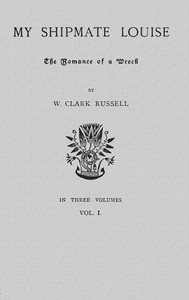
That moment aboard the Corsaire, surrounded by gold yet utterly alone, stayed with me long after I closed the book. It reminded me of another quiet ache in My Shipmate Louise: The Romance of a Wreck, Volume 3 (of 3) — A Closer Reading—how wreckage can leave you more stranded with yourself than any ocean ever could.

David Campbell
2 weeks ago

Sofia Nelson
1 week ago

4
4 out of 5 (2 User reviews )

Add a Review

Your Rating *
  • ...
    Brandon Torres - 1 month ago
    A solid, well-written narrative about a maritime disaster. The descriptions of the storm and the wreck are vivid and memorable. The characters are believable, and their interactions feel authentic. However, the pacing is uneven, and the middle section drags as the story focuses on minor details. The climax is gripping, though, leaving a lasting impression. Overall, it's a worthwhile read for those interested in historical sea adventures.

  • ...
    Caitlin Brianna Navarro - 2 weeks ago
    A masterpiece of maritime fiction! 'The Wreck of the Corsaire' is a richly detailed account of a shipwreck and its aftermath. The author's research is impeccable, and the narrative is both thrilling and thought-provoking. The survivors' struggles are portrayed with raw emotion, making you feel their desperation and hope. This book is a timeless classic that captures the relentless power of the sea and the resilience of the human spirit.

  • ...
    Cynthia Michael Kennedy - 1 week ago
    'The Wreck of the Corsaire' could have been an engrossing tale, but it's bogged down by excessive exposition and an overly dramatic style. The characters are underdeveloped, and the plot meanders without clear direction. The lack of context for the ship's voyage and the crew's motivations makes it hard to care about their fate. While there are some tense moments, they are few and far between. I struggled to stay engaged.


Reader reflection

What was your reading experience?

Capture what you thought, learned, and would like to remember.

Your progress 0 / 10
1

Which reading stage best describes you?

2

Was reading this book enjoyable?

3

Would you recommend this book to another reader?

4

What was the reading difficulty like?

Related eBooks