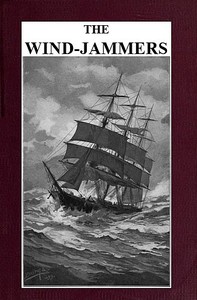
The Wind-Jammers — Themes and Context

(3 User reviews)   853
In Category - Sailors Ships
Hains, T. Jenkins (Thornton Jenkins), 1866-1953 Project Gutenberg 2017 Not confirmed
Short stories, American; Sailors -- Fiction; Sea stories, American Readers of public-domain and historical texts
Project Gutenberg digital edition en

Edition facts

Words 72,064
Reading time 314 min
Text sections 7

This digital edition of The Wind-Jammers — Themes and Context is described by source-level measurements including 72,064 words, 5 hr 14 min estimated reading time, and 7 detected text sections.

The text analysis averages about 19.5 words per sentence, while the detected sections provide another way to judge how the source is divided.

Project Gutenberg metadata also associates the work with “Short stories, American,” connecting these edition facts with the source record’s subject description.

An editorial note on T. Jenkins Hains's The Wind-Jammers, focusing on how the opening, middle, and later excerpts guide a first reading through precise observations about narrative voice, structure, and recurring details.
Share
Editorial Edition Score 4.7/5

Calculated from edition completeness, EPUB availability, text structure and catalogue metadata. Not a user rating.

How this score is calculated
  • Description quality20 pts
  • Title & short description10 pts
  • Source metadata20 pts
  • Text length15 pts
  • Chapters / structure15 pts
  • EPUB file integrity20 pts

Total of 100 points, scaled to a 2.5-5.0 range. Editions with an empty description or a missing EPUB file are not scored.

Edition quality

Read the Text

r young Episcopal clergyman, who was very attentive to Peggy. He thought Mr. Robinson’s conversation more fascinating than instructive.

One day, late in the winter, three rough-looking men appeared in the yard and asked for work. They were put on the gang under my father. The leader of these men was a perfect giant in size, and had a head as big and bald as the butt of a twelve-pounder. He also had a face and manner of peculiar fierceness.

I happened to be near him one day when my father gave him an order, which he roughly answered with a great oath. Instantly Mr. Robinson turned about and, holding up his hands, raised his face to heaven and bade him ask forgiveness for using such language.

The deep tones of his voice startled me at first with their intenseness, but the great ruffian laughed. Then he suddenly caught Mr. Robinson’s eye, and a change came upon him.

He quietly asked my father’s forgiveness and apologized for swearing; then he resumed work with an agility that reminded me I must not stand about gaping.

Mr. Robinson, however, was not satisfied with what he had accomplished. He went to the foreman and, after a little argument, persuaded him to discharge the three new men, much to the big bald-headed ruffian’s apparent disgust.

This fellow and his comrades left the yard with some show of feeling against Mr. Robinson, and went directly to our young pastor, Mr. Rhett, with their grievance. They showed him letters telling of their good character, signed by several prominent officers in the army at the North, and explained that they wished to work, and could do so to some advantage on a part of the hull where Mr. Robinson would not be annoyed by their presence.

When Mr. Rhett heard it was Mr. Robinson who had had the men discharged his indignation ran high, and he went about telling such a tale of persecution that even my mild-mannered sister Peggy was ready to take up matters in their behalf.

Mr. Rhett went to the foreman and had the men put back on the work, and was loud in his praise of them.

They really were the best men for heavy work in the yard, and when, a few days later, they asked to have several of their friends employed, Mr. Rhett was quite willing to recommend them. As he was very popular in the community, his word was of so much value that they were immediately turned to with their comrades.

Mr. Robinson took no further notice of the matter, but about a week before the launching Peggy came to me and, with many pretty blushes, told me I was about to have a new brother. My father and mother had consented to the marriage and every one was as happy as could be. That is, every one except Mr. Rhett.

The wedding took place the day of the launching of the ship, and Peggy was a proud girl as she stood there on the forward deck and watched a beautiful woman break a bottle of wine over the vessel’s bows. Then a cannon-shot boomed out and the name “Randolph” was cheered again and again. It was a memorable day in our family, and my father came home in such a state my poor mother instantly sent me for the doctor.

Of course, after this event of the launching, all talk was of the war and of what part the frigate--named after the Hon. Peyton Randolph, of Virginia--would take in it.

It was not long before the ship had her guns aboard and the riggers were through with her. Then Captain Biddle began looking for volunteers to help man her.

Seamen were not plentiful, but as a man-of-war must have men to man her battery, landsmen are as good as any other class for this work after they have had a little training.

I begged hard to join, and as I had now been out of employment nearly two months, while the frigate was fitting out, and as I also had a hearty appetite, my poor father and mother at last consented. This, provided that I could be regularly shipped, and so have some chance of promotion.

I was very happy and excited the morning my father took me on board and asked Captain Biddle for his favor, and when I found I was really to go to sea in that splendid ship I fairly danced with joy.

I was a heavy, active boy, and soon learned to handle a musket, cutlass, or boarding-pike in a satisfactory manner.

The best men for this sort of thing, however, were those recommended by Mr. Rhett. There were over twenty men aboard in this party, and they had enlisted for the full term of the cruise. It was astonishing to see how that bald ruffian would perk himself up when handling a musket or cutlass.

Finally the day came for sailing, and a great crowd collected to bid us farewell. I saw my parents early in the day, and then Peggy and her husband came to bid me an affectionate good-by, my poor sister weeping upon my shoulder and hugging me again and again.

Three hundred and five men stood upon the frigate’s deck and manned the yards, to answer the shouts from the shore with three ringing cheers. A gun boomed the parting salute, our yards were braced sharp on the backstays to the southerly breeze, and we stood rapidly out to sea.

When the bar was crossed and the long, easy roll of the ocean was felt, I began to get a little homesick. I forgot the grand thoughts I had indulged in but an hour before.

I struggled against this peculiar feeling for some time, and then a particularly heavy rolling sea taking the frigate squarely on the beam, I leaned over the side, and cared not whether I was alive or dead.

My paroxysms must have attracted some attention, for I heard several men laugh. I turned quickly, and at that moment a hand was laid heavily upon my shoulder, and Mr. Robinson stood before me. He flashed a look at the grinning men and they turned away.

Then he raised that thin, piping voice of his into a deep, sonorous tone, and, lifting his face skyward, bade me have faith in the Lord. I had actually begun to think I was dying, for the qualms were most severe; so the grave face and solemn manner of my brother-in-law were very welcome to me in spite of my utter astonishment at seeing him aboard.

I thanked him for his kindness, and gained much strength from his words, and then, without further remark, I lay down beside a broadside gun and tried to lose consciousness.

All that night and the next day I suffered agony, but I found myself able to attend to some duties, and asked Mr. Robinson why and how he came to be on board. These questions he answered abruptly, but gave me to understand that it was my sister’s wish that he should serve his country as a sailor.

In a few days I was entirely well, and I was put to work as a powder-boy, to help pass ammunition from the magazine to the guns.

The gun crews were drilled and the pieces fired to test their accuracy and exercise the men. Then we were ready for any enemy of our size and rating. Even greater, for that matter; for while we only rated as a thirty-six-gun frigate, Captain Biddle was an officer of such high spirit and courage that he would have willingly engaged a ship of the line had one appeared.

Robinson was made captain of an after broadside gun crew, for in spite of his knowledge of religious matters he was every inch a sailor, and knew more of nautical affairs--including the handling of naval guns--than any man on the ship, except, perhaps, Captain Biddle himself.

Four of the men recommended by Mr. Rhett were in his gun’s crew, and they were the stoutest and most grim-looking ruffians when working stripped to the waist that ever stood behind the breech of a twenty-four-pounder. When they drilled, they would practise running in their gun and whirling it around on the deck, and then send the tackles about in a most confusing manner.

Finally the officer of the deck had to interfere, and give Robinson to understand that gymnastic exercises were out of place on the gun-deck.

In spite of this he was highly esteemed by Captain Biddle, and when his men yelled at each discharge he was not reprimanded.

We were off Charleston one evening, cruising to the eastward under easy canvas, and waiting for a prize to heave in sight. Several British vessels were known to be bound for the colonies, loaded with arms and supplies for the enemy’s troops, and it would be a godsend to catch up with one, as there were not half enough muskets ashore to equip the volunteers in the Carolinas.

It was noticed by some on board that, while the majority of the men and all the officers appeared anxious for a meeting with the foe, there was a peculiar apathy shown among a part of the crew. These were the men whom Mr. Rhett had helped to get work, and they appeared quiet and listless, taking no interest in the sails we raised above the horizon and maintaining a manner of sullen effrontery to all who did not share their intimacy.

It was first supposed that the new life and discipline did not appeal favorably to them, but as they made no complaint little thought was given to the matter. Robinson kept away from this crowd except at drill times, and then he did much to exhort them not to be so profane.

Several times I noticed groups of men, who were not on watch, having a large sprinkling of these fellows among them standing about, talking in a manner that could hardly be said to speak well of the discipline aboard the ship.

The sun had gone down but little over half an hour, dyeing the light clouds in the west a fiery red, when the man on the lookout in the foretop hailed the deck.

“Sail dead ahead, sir!” he bawled.

In half a second all eyes were turned in that direction. Instantly royals were sheeted home, while the outer jibs, topmast, and topgallant-staysails were run up, making the frigate heel to leeward under the pressure.

Men were sent to quarters, the magazines opened, the guns loaded and run out, and everything was ready for action.

We had little time to wait to find out what the vessel was ahead, for her captain was evidently as anxious to meet us as we were to meet him, and he stood for us with every stitch of canvas drawing alow and aloft.

It grew quite dark, but we could still see the stranger, and by the heavy topsails and well-trimmed yards it was easy to see that the vessel was a man-of-war.

In about half an hour we came abreast, and not more than fifty fathoms distant, but somehow the Randolph was sent to leeward, giving the stranger the weather-gage. Then we had no difficulty in recognizing the frigate Yarmouth, sixty-four guns, commanded by Captain Vincent of his majesty’s navy.

As we were new and unknown, the British ensign had been run up to deceive the enemy, Captain Biddle hoping to get in close and deliver a crippling broadside before the Yarmouth was aware of our intentions, but I am not certain whether it was seen or not in the darkness.

Every man was at his post, standing silent and motionless in the dim light of the battle-lanterns, and every gun on the starboard broadside was kept trained on the British frigate.

We drew directly abreast, and a hoarse voice hailed us through the gloom.

“Fire!” came the order clear and distinct from the quarter-deck, and our answer to the hail was the deep rolling thunder of twenty heavy guns, fired almost simultaneously.

Then, as we ran clear of the cloud from our guns, the Yarmouth appeared to burst into a spitting line of flame, and the shot from her answering broadside crashed among us while she disappeared in a storm of smoke.

The scene on our spar-deck was frightful. Men struck by the flying shot or splinters were hurled and pitched about and fell in mangled groups upon the sanded planks.

Then the order came to wear ship, and we paid off rapidly to the northward, to bring our port broadside to bear upon the enemy as she crossed our wake, coming after us in full chase.

We were new and light, and probably able to go two knots to her one, if no accident happened to our sailing gear. Our rigging had not been seriously cut and our spars were sound, so it is hard to tell just how the action would have ended had the fight continued as it commenced.

But there were other matters at hand far more dangerous to us than his majesty’s sixty-four-gun frigate Yarmouth.

As I passed a powder charge to the after starboard gun, I turned and looked across the deck at Robinson and his crew.

Instead of running his gun out and laying it towards the enemy, he and his men quickly shifted the tackles and, slewing it around, trained it down the port broadside through the line of gun crews. As he did so, some thirty men--among whom I recognized the big bald ruffian and his comrades of the ship-yard--rushed down the starboard side, and came aft, yelling and swearing and with their cutlasses swinging in their hands.

They took their places around and behind Robinson’s gun, while one man stepped out and coolly rammed a bag of musket-balls down the muzzle.

“What are you doing?” roared the officer of the deck from the break of the poop.

“Watch me,” said Robinson, quietly; and with that he let off the heavy gun, double charged, along the deck.

The discharge swept the gangway clear of living men, the poor, surprised fellows going down in groups like grass before a scythe-blade. Then, with a roaring yell, the ruffians left the spar-deck to the gun crews and rushed aft in a body, with Robinson and the bald-headed giant at their front.

It was all so sudden no one realized what was taking place. The ship was off before the wind, racing along to the northward through the gloom.

The lanterns of the port battery were smashed or blown out, and the shrieks and groans of the wounded men added to the confusion and terror of the scene. Those men left alive and unhurt on the port side were tailing on to the waring braces.

The officers forward bawled and swore at the bewildered sailors, trying to get them to realize their position, and while they did so the villains were taking the quarter-deck.

It was a short, desperate fight aft, but they had laid their plans so well that every officer was taken off his guard and cut down before even preparing to make a defence. Then the ruffians were masters of the quarter-deck.

I saw the Yarmouth on the port quarter. She loomed dimly through the gloom nearly a mile away, and as I looked I saw the intermittent flashes of her bow-chasers and heard the regular firing.

A shot from one of her long twenty-fours tore past me, and killed a man who was just starting aft to join in the affray on the poop. I thought for an instant that they might know on the Yarmouth what was taking place on board the Randolph, but afterwards I found they knew nothing.

In a few moments the men forward began to see what had happened aft, and they just recovered themselves as Robinson and his crew finished off the last man and were running the ship away to the northward without a thought of engaging the enemy.

So far the villains had been successful, and with another turn of good luck would be masters of a large frigate, fully equipped and provisioned for a long cruise.

Robinson could then have become a wealthy pirate in the West Indian and South American waters, and retired from the sea in a year or two without much danger of being caught, for his vessel was larger and faster than any he would be likely to meet. From the capes of Virginia to the river Plate no vessel of this size had cruised for years, and he would have had a good chance to make a clean sweep before anything caught up with him.

But this turn of luck for him did not occur. When he had finished his deadly work aft and started his men forward, our men rallied, and, led on by the under officers left alive, began to make a stand.

Robinson rushed his men on in a style worthy of a better cause. And the way that great bald ruffian went into our poor fellows was astounding.

They charged up the port gangway in a close body and engaged with pike and cutlass, forcing those before them who were not cut down, until they reached the mainmast. Robinson appeared like a fiend. He roared and yelled to his men to press on, and slashed right and left with amazing power.

The great bald ruffian, who now appeared as his right-hand man, kept close to him, and they went along that deck leaving a bloody path to mark their course.

They cut down and killed or wounded every man who had the hardihood to dispute their way. I saw Robinson strike a gunner a blow that stretched him dead with his skull cleft to the ears, and then, instantly recovering his weapon, he drove it clear through the body of the man next to him.

One officer alone stood before the rush. I do not remember his name, but he commanded the forward battery.

He engaged Robinson for an instant and smote him sorely with his weapon, for, although I could not see the stroke in the gloom, I heard the villain cry out fiercely as if in pain. The next instant the bald man struck the officer to the deck and pressed on harder than ever.

This officer evidently understood the situation to be more desperate than it really was, for, as the crowd of ruffians passed over him, he arose with difficulty and staggered to the hatchway which led to the magazine. I guessed his purpose the instant he disappeared, and I saw him no more.

The fight went on forward for some minute longer, and I was driven to the forecastle by a fierce scoundrel who bore down on me with a reeking cutlass. Then a sudden rally of our men turned my enemy and their rush was brought to an end.

As we were five to one in point of numbers, it now began to look as if we would soon make way against the assault. Some of our men got around in their rear, and we began to close in on them with something like a chance of winning the fight, but it was never fought out.

I saw the big bald man strike furiously at a man near me, and swing his weapon around so fiercely that not one of our men dared get within its reach, although they brought up stubbornly just beyond it. Then Robinson dashed in to where I stood with my loaded musket. I fired blindly and then saw his blade flash up, and I felt my end had come.

At that instant the whole ship shivered and burst into a mass of flame. I felt myself hurled into the air as the deck disappeared under me, and the next moment I found myself in the water.

I looked around me on all sides and saw nothing but the waves that stretched away into the surrounding gloom. I was uninjured and swam easily, thinking that my end must be near, and that I could only prolong my existence by half an hour’s hard struggle.

I was much dazed, but remembered the Yarmouth, and looked about for some sign of her.

Finally I made out a dark object over a mile away, and soon I recognized her standing directly for me. This gave me hope for a short time, and I struck out strongly, thinking it might be possible to gain her if she remained in the vicinity of the blown-up frigate.

The first story, “The Executive of the Randolph,” opens with a sixteen-year-old narrator working in a shipyard during the American Revolution. The prose is plain and reportorial: “My task consisted in carrying water for the men to drink.” This matter-of-fact tone quickly gives way to unease when the new assistant’s eyes are described as “the whites of them in their corners.” The narrator’s fear upon meeting the man’s gaze—a “fierce look” that makes him almost drop a bolt—signals that Hains builds tension through small, physical details rather than grand declarations. The assistant’s later appearance “dressed and powdered like any gentleman” introduces a class contrast that recurs across the collection.

A Collection of Contrasts

The table of contents lists sixteen stories, but the excerpts show that Hains does not confine himself to one era or setting. “The Executive of the Randolph” takes place during the Revolutionary War, while later excerpts mention the Cape Horn fleet and a pirate named Craven operating off China. The variety is deliberate: the collection moves from shipyard to open ocean, from historical conflict to lawless adventure. Readers should expect each story to introduce a new cast and a fresh conflict, often anchored by a single strong character—a captain, a pirate, or a common sailor. The unifying thread is not plot but the sea itself, and the way men behave when isolated by salt water.

The Weight of a Single Gaze

Hains repeatedly uses eyes and glances to convey character. In the opening story, the assistant’s “fierce look” terrifies the young narrator, while his usual smile and flattery win over the other workmen. This split between appearance and reality is a motif. Later, in the excerpt about Captain Craven, the pirate’s “sinister humor” is described without direct dialogue—we learn of his cruelty through reported actions, such as tying two Chinamen together by their pigtails. Hains trusts the reader to infer menace from behavior rather than from internal monologue. When reading, pay attention to what characters do when they are not speaking; the author often reveals their nature through a single, telling gesture.

Morality in the Margins

The excerpt about the captain of the Penguin presents a man who is both a “notorious desperado” and a hero who dies at his post. Hains does not resolve this contradiction: “the majority were willing to forget his record in his gallant end.” This refusal to moralize is typical of the collection. Characters are judged by their competence and courage, not by conventional ethics. The pirate Craven, for instance, is described as “bold” and “desperate,” and his skill as a navigator is noted without condemnation. Readers should not expect clear heroes or villains. Instead, Haines offers a world where seamanship and nerve matter more than law, and where a man’s final act can overshadow a lifetime of violence.

The Shape of the Sea Story

Hains structures his tales around moments of crisis: a flying butt, a ship run ashore, a junk attacked. The excerpts rarely show the aftermath; they end at the peak of action or with a terse summary. In “The Executive of the Randolph,” the narrative breaks off just as the assistant’s true nature is hinted. The Craven passage concludes with a report of his atrocities, not his capture. This technique keeps the reader off-balance. A first reading should focus on how each story builds toward a single, vivid scene—often violent—and then stops. The collection rewards attention to the way Hains controls pacing, using short paragraphs and blunt sentences to create a sense of urgency that mirrors the sea itself.

Because the excerpts are incomplete, readers should treat each story as a self-contained episode rather than part of a larger arc. Hains’s strength lies in the specific: a look, a gesture, a detail of rigging. By watching for these small signals, you will find that the collection offers a series of sharp, unsentimental portraits of men under pressure. The sea is not romanticized; it is a backdrop for human nature in its rawest form.

I remember how Hains’s excerpts kept whispering about the weight of a single rope-coil, that quiet attention to detail. It reminds me of another old friend, The Sandman: His Sea Stories — Text and Context, where the same patient noticing of small things anchors every wave. They share a gentle, unhurried way of holding the sea still.

Ella Hill
2 weeks ago

Olivia Scott
3 weeks ago

Isaac Nguyen
1 month ago

5
5 out of 5 (3 User reviews )

Add a Review

Your Rating *
  • ...
    Corey Peters - 4 weeks ago
    The Wind Jammers fails to grip the reader due to its lack of a coherent plot and shallow character development. The story meanders from one mundane event to another, and the supposed 'drama' is undercut by lengthy, technical descriptions that kill the pacing. The dialogue is stiff, and the characters are interchangeable. I expected more action and adventure from a sea tale, but instead, I got a dry logbook. Not recommended for modern adventure fans.

  • ...
    Jason Baker - 1 week ago
    The Wind Jammers is a thrilling ride through the Age of Sail, capturing the raw power of the sea and the grit of sailors. The author's firsthand knowledge of ships and navigation shines through in the detailed, realistic depictions of a sea voyage. The characters are sharply drawn, and the interactions among the crew create a rich social drama. Whether you're a seasoned sailor or a landlocked dreamer, this book will make you feel the spray of the sea. A captivating maritime classic.

  • ...
    Heather Wolf - 1 week ago
    The Wind Jammers provides an authentic look at life aboard a sailing ship, with excellent descriptions of storms and daily routines. The main character's growth over the voyage is interesting. However, the narrative sometimes gets bogged down in technical details that might overwhelm casual readers. The plot is somewhat episodic, with fewer dramatic peaks than expected. Still, it's a solid read for those who appreciate nautical history.


Reader reflection

Record your reading impressions

A brief reflection can help important ideas stay with you longer.

Your progress 0 / 10
1

Where are you in your reading?

2

How much did you enjoy the reading experience?

3

Would you encourage someone else to read it?

4

How easy was the book to follow?

Related eBooks