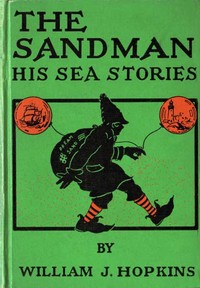
The Sandman: His Sea Stories — Text and Context
Edition facts
The source record for The Sandman: His Sea Stories — Text and Context measures this digital text at 43,965 words, 3 hr 12 min estimated reading time, and 6 detected text sections.
The text analysis averages about 20.1 words per sentence, while the detected sections provide another way to judge how the source is divided.
Project Gutenberg metadata also associates the work with “Sea stories,” connecting these edition facts with the source record’s subject description.
Calculated from edition completeness, EPUB availability, text structure and catalogue metadata. Not a user rating.
How this score is calculated
- Description quality20 pts
- Title & short description10 pts
- Source metadata20 pts
- Text length15 pts
- Chapters / structure15 pts
- EPUB file integrity20 pts
Total of 100 points, scaled to a 2.5-5.0 range. Editions with an empty description or a missing EPUB file are not scored.
Read the Text
They were all standing in the water, but they didn't know it. And they saw all sorts of things going up the river, with the wind and the waves: many small boats that had been dragged from their moorings or off the beaches; and some larger boats that belonged to fishermen; and some of the fishermen's huts that had stood in a row on a beach; and a part of a house that had been built too near the water; and logs and boards from the wharves and all kinds of drifting stuff. It was almost high tide now, and the wind was stronger than ever. None of the men had had any breakfast, but they didn't think of that.
"About the height of it, now," said the mate to Captain Jacob. They could hear each other speak where they were standing, in a place that was sheltered by the building. "Not so bad here, in the lee of the office. And the wind'll go down as the tide turns, I'm thinking."
Captain Jacob nodded. He was watching the _Industry_ pitching in the great seas that were coming up the river.
"She ought to have more chain out," he said anxiously. "I wish we could have given her more chain. It's a terrible strain."
"If a man was to go out to her," began the mate, slowly, "he might be able to give her more. He could shin up those warps----"
"Don't think of it!" said Captain Jacob. "Don't think of it!"
As he spoke, the ship's bow lifted to a great sea, there was a dull sound that was scarcely heard, and she began to drift, slowly, at first, until she was broadside to the wind. The anchor chain had broken; but the great ropes that were fastened to the wharf still held her by the stern. Then she drifted faster, in toward the wharves. There was a sound like the report of a small cannon; then another and another. The great ropes that had held her to the wharf had snapped like thread.
"Well," said Captain Jacob, "now I wonder where she'll bring up. We can't do anything."
So they watched her drifting in to the wharf where the railway was, where they pulled ships up out of the water to mend them. And Captain Jonathan was coming down to the office just as the _Industry_ broke adrift, and he saw that she would come ashore at the railway. So he stopped there and waited for her to come. They had there a sort of cradle, that runs down into the water on rails; and a ship fits into the cradle and is drawn up out of the water to be mended. And Captain Jonathan thought of that, and he thought that it wouldn't do any harm to lower the cradle and see if the _Industry_ wouldn't happen to fit into it. It might not do any good, but it couldn't do any harm; and the _Industry_ was all unloaded, and floated very high in the water.
So Captain Jonathan and two other men, who belonged at that railway, lowered the cradle as much as they thought would be right, and the _Industry_ drifted in and she did happen to catch on the cradle. She didn't fit into it exactly, for she was heeled over by the wind, and she caught on the cradle more on one side than the other; but Captain Jonathan thought that she would go into the water all right when the tide went down a little and the cradle was lowered more. And he was glad that he had happened to think of it.
Then, pretty soon, the tide began to go out again, and the wind stopped blowing so hard. And, in an hour, there was not more than a strong gale blowing, and men began to go out in row boats that hadn't broken adrift, and to pick things up as they came down with the tide. The sea was very rough, but they were afraid that the things would drift out to sea if they waited.
And, in a couple of hours more, Captain Jonathan and Captain Jacob and the mate and all the men had the _Industry_ afloat again and were warping her back to her wharf. There was no great harm done; only some marks of scraping and bumping and the anchor down at the bottom of the river.
Then Captain Jonathan and Captain Jacob went home to dinner, and pretty soon all the men went, too. And they saw a great many chimneys blown over into yards and a great many fences blown down; and they came to a great tree that was blown down across the street, and then they saw another and a third. And they had to go through somebody's yard to get around these trees. And, when they got home, they heard about an old woman who had tried to go somewhere, who had been picked up by the wind and carried a long way and set down again on her own doorstep. And she had taken the hint and gone into the house.
That great wind, they called the Great September Gale, for it happened in the early part of September. That is the time of the year that such great winds are most apt to come. And all the people had it to talk about for a long time, for there wasn't another such gale for more than twenty years.
Once upon a time there was a wide river that ran into the ocean, and beside it was a little city. And in that city was a wharf where great ships came from far countries. And a narrow road led down a very steep hill to that wharf, and anybody that wanted to go to the wharf had to go down the steep hill on the narrow road, for there wasn't any other way. And because ships had come there for a great many years and all the sailors and all the captains and all the men who had business with the ships had to go on that narrow road, the flagstones that made the sidewalk were much worn. That was a great many years ago.
The river and the ocean are there yet, as they always have been and always will be; and the city is there, but it is a different kind of a city from what it used to be. And the wharf is slowly falling down, for it is not used now; and the narrow road down the steep hill is all grown up with weeds and grass.
One day, in the long ago, the brig _Industry_ sailed away from that wharf, on a voyage to India. And she sailed down the wide river and out into the great ocean and on and on until the land was only a dim blue streak on the horizon; and farther on, and the land sank out of sight, and there was nothing to be seen, wherever Captain Solomon looked, but that great, big water, that was so blue and that danced and sparkled in the sunshine. For it was a beautiful afternoon and there was just a gentle wind blowing, so that the _Industry_ had every bit of sail set that could be set: mainsail and foresail and spanker, main-topsail, and fore-topsail, main-topgallantsail and fore-topgallantsail and main-royal and fore-royal and main-skysail and fore-skysail and staysails and all her jibs and a studdingsail on every yard, out on its boom. She was sailing very fast, and she was a pretty sight, with that cloud of canvas. She looked like a great white bird. I wish that you and I could have seen her.
And the crew didn't have much to do, when they had got all those sails set. They had already been divided into watches, so that every man knew what his duty would be, and when he would have to be on deck, ready to work, and when he could sleep. And they stood at the rail, mostly, and they leaned on it and looked out over the water in the direction of that little city that they were leaving behind them and that they wouldn't see again for nearly a year. They couldn't see the little city because it was down behind the roundness of the world; but they saw the sun, which was almost setting. And the sun sank lower and lower until it sank into the sea. And there were all sorts of pretty colors, in the west, which changed and grew dim, and disappeared. And the stars came out, one by one, and it was night.
Captain Solomon didn't have any of those many sails taken in, because he knew that it would be pleasant weather all night, and that the wind would be less rather than more. And it was such a beautiful night that he didn't go to bed early, but stayed on deck until it was very late; and he watched the stars and the water and he listened to the wash of the waves as the ship went through them and he saw the foam that she made; and he felt the gentle wind blowing on his cheek, and it all seemed very good to him. Captain Solomon loved the sea. Then, when it was very late, and they were just going to change the watch, he went into the cabin to go to bed.
Before he had got his clothes off, he heard a commotion on deck, and the mate came running down.
"The ship's on fire, sir," he said. "There's smoke coming out of the forward hatch."
Captain Solomon said something and threw on his clothes that he had taken off and ran out on deck. It was less than half a minute from the time the mate had told him. And he saw a little, thin column of smoke rising out of the forward hatchway, just as the mate had said. They had the hatch off by this time, and the sailors were all on deck. The hatchway is a square hole in the deck that leads down into the hold, where the things are put that the ship carries. It has a cover made of planks, and the cover fits on tightly and can be fastened down. It usually is fastened when the ship is going.
Captain Solomon spoke to the mate. "Put her about on the other tack," he said, "and head for Boston, while we fight it. If we get it under, as I think we will, we'll lose only a couple of hours. If we don't, we can get help there. We ought to make Boston by daylight."
"Aye, aye, sir," said the mate. And he gave the orders in a sharp voice, and most of the crew jumped for the sails and the ropes and pulled and hauled, and they soon had the ship heading for Boston. But the second mate and a few of the sailors got lanterns and lighted them.
And, when they had lighted their lanterns, the second mate jumped down the hatchway into the smoke, and four sailors jumped down after him. And they began tumbling about the bales of things; but they couldn't tumble them about very much, for there wasn't room, the cargo had been stowed so tightly. And the second mate asked Captain Solomon to rig a tackle to hoist some of the things out on deck.
"Doing it, now," answered Captain Solomon. "It'll be ready in half a minute."
And they got the tackle rigged right over the hatchway, and they let down one end of the rope to the second mate. This end of the rope that was let down had two great, iron hooks that could be hooked into a bale, one on each side. And the second mate and the sailors that were down there with him hooked them into a bale and yelled. Then a great many of the sailors, who already had hold of the other end of the rope, ran away with it, so that the bale came up as if it had been blown up through the hatchway. Then other sailors caught it, and threw it over to one side and unhooked the hooks, and they let them down into the hold again.
They got up a great many bales in this way, and they did it faster than the _Industry_ had ever been unloaded before. And the sailors that ran away with the rope sang as they ran.
"What shall we do with a drunken sailor?"
was the chanty that they sang. And, at last, the second mate and the four sailors came out of the hold, and they were choking with the smoke and rubbing their eyes.
"Getting down to it, sir," said the second mate, "but we couldn't stand any more."
So the first mate didn't wait, but he took the second mate's lantern and jumped down.
"Four men follow me!" he cried; and all the other sailors, who hadn't been down yet, jumped for the lanterns of the four sailors who had been down, and Captain Solomon laughed.
"That's the way to do it!" he cried. "That's the sort of spirit I like to see. We'll have it out in a jiffy. Four of you men at a time. You'll all have a turn. Man the pumps, some of you, and be ready to turn a stream down there if it's wanted."
So the four who had been nearest to the lanterns went down, and some of the others tailed on to the rope, and still others got the pumps ready and rigged a hose and put the end of it down the hatchway. But they didn't pump, because Captain Solomon knew that water would do harm to the cargo that wasn't harmed yet, and he didn't want to pump water into the hold unless he had to.
Then they all hurried some more and got out more bales, until the mate and his four men had to come up; but there were more men waiting to go down, and, this time, Captain Solomon led them.
He hadn't been there long before he called out. "Here she is!" he said. And the sailors hoisted out a bale that was smoking. As soon as it was on deck, out in the air, it burst into flames.
Captain Solomon had come up. "Heave it overboard!" he cried. And four sailors took hold of it and heaved it over the side into the water. The _Industry_ was sailing pretty fast and quickly left it astern, where it floated, burning, for a few minutes; then, as the water soaked into the bale, it got heavier, and sank, and the sailors saw the light go out, suddenly.
Captain Solomon drew a long breath. "Put her on her course again, Mr. Steele," he said to the mate. "We won't lose any more time. You can have this mess cleared up in the morning."
And the sailors jumped for the ropes, although they were pretty tired, and they swung the yards around, two at a time, with a chanty for each. The _Industry_ was sailing away for India again. And, the next day they cleared the smoke out of the hold, and they stowed the cargo that had been taken out in the night, and they put on the hatch and fastened it.
Once upon a time there was a wide river that ran into the ocean, and beside it was a little city. And in that city was a wharf where great ships came from far countries. And a narrow road led down a very steep hill to that wharf, and anybody that wanted to go to the wharf had to go down the steep hill on the narrow road, for there wasn't any other way. And because ships had come there for a great many years and all the sailors and all the captains and all the men who had business with the ships had to go on that narrow road, the flagstones that made the sidewalk were much worn. That was a great many years ago.
The river and the ocean are there yet, as they always have been and always will be; and the city is there, but it is a different kind of a city from what it used to be. And the wharf is slowly falling down, for it is not used now; and the narrow road down the steep hill is all grown up with weeds and grass.
Once, in the long ago, the brig _Industry_ had sailed away from the wharf and out into the great ocean on a voyage to India. And she had been gone from the wide river three or four days, and she was well out into the ocean and no land was in sight, but only water and once in a while another ship. But they didn't see ships as often as they had at first, and it was good weather and the wind was fair, so that there wasn't anything much for the sailors to do. The mates kept them as busy as they could, washing down the deck and coiling ropes, and doing a lot of other things that didn't need to be done, for the _Industry_ had just been fixed up and painted and made as clean as she could be made. And that was pretty clean. So the sailors didn't care very much about doing a lot of things that didn't need to be done, but they did them, as slowly as they could, because, if they said that they wouldn't do things that the mates or the captain told them to do, that would be mutiny. And mutiny, at sea, is a very serious thing for everybody. It satisfied Captain Solomon and the mate well enough to have the men do things slowly, so long as they did them. For they knew that the men would do things quickly if there was any need for quickness.
Then, one morning, just as it began to be light, the man who was the lookout thought that he saw something in the water about the ship that didn't look quite like waves. And it got a little lighter so that he could make sure, and he called some others of his watch and told them to look and see the school of porpoises. And they all looked, and those men told others who looked over the side, too, and pretty soon all the men of that watch were leaning on the rail and looking at the porpoises. That made the mate who was on watch look over, too, so that every man on deck was looking over the side into the water. Then the sun came up out of the water.
What they saw was a great many big fishes, all black and shining, and each one had spots of white on its side and a funny-shaped head. Most of them seemed to be about the size of a man, and they swam in a funny sort of way, in and out of the water, so that their backs showed most of the time, and they glistened and shone and their spots of white made them rather a pretty sight. And now and then they spouted little jets of water and spray out of their heads into the air, just as if they were little whales. Porpoises are more like little whales than they are like fishes, for they have to breathe air, just as whales do, and they spout just as whales do, and they are like whales in other ways. They aren't really fishes, at all.
The _Industry_ was sailing very fast, for the wind was fair and strong, and she had all the sails set that she could set; but the porpoises didn't seem to think she was going very fast, for they had no trouble at all to keep up with her and they could play by the way, too. And so they did, hundreds of them. Some of them kept just ahead of her stem, where it cut through the water, and they leaped and gambolled, but the ship never caught up with them. And they were doing the same thing all about.
Seeing the porpoises that kept just ahead of the _Industry_ made the sailors think of something and they all thought of the same thing at once. Perhaps it was because it was about breakfast time. Four of the men went aft to speak to the mate, who was standing where the deck is higher. And the mate didn't wait for them to speak, for he knew just what they were going to ask him. The men had their hats in their hands by the time they got near.
Every story in The Sandman: His Sea Stories begins with the same measured phrase: "Once upon a time there was a wide river that ran into the ocean, and beside it was a little city." This repetition, rather than feeling mechanical, establishes a ritualistic frame that signals a return to a familiar world of wharves, ships, and the brig Industry. The author, William J. Hopkins, uses this incantatory opening to ground each tale in a specific geography—a river, a city, a steep hill—before launching into the particular adventure. The effect is cumulative: the reader learns to expect both the comfort of the formula and the novelty of what follows.
Repetition as Structure and Signal
The opening sentence is not the only repeated element. In both the September-Gale Story and the Albatross Story, the same paragraph describing the river, city, wharf, and narrow road appears verbatim. This is not a flaw but a deliberate structural choice. Hopkins treats each story as a self-contained episode that can be entered without prior knowledge, yet the repeated passage creates a sense of continuity across the collection. The phrase "a narrow road led down a very steep hill to that wharf" appears in both excerpts, anchoring the setting in a physical detail that is easy to visualize. The repetition also mirrors the oral storytelling tradition—the Sandman, a frame narrator implied by the title, would naturally reuse certain phrases as he spins tale after tale.
Captain Solomon's Voice: Authority and Bluster
Captain Solomon's dialogue reveals a man who governs through theatrical anger and calculated leniency. In the Stowaway Story excerpt, he "blew him up sky high" and threatens bread and water for a month, but little Sol knows "his father hadn't any idea of doing it." The captain's speech is peppered with nautical idioms—"blew him up," "as sure as his own name was Solomon"—and his moral code is clear: he will not refuse passage to a good sailor, but he demands duty and honesty. His final act of blowing up the mate and then feeling "very pleasant indeed" shows a man who uses anger as a tool, not a genuine loss of temper. This blend of sternness and fairness gives the captain a distinct, memorable voice.
Precision in Description: The Albatross
When little Jacob and little Sol spot the albatross, Hopkins describes it with careful specificity: "all white, so far as they could see," with a bill "rather long and straight, and was hooked at the." The description is limited to what the boys can observe from the deck—they cannot see the bird's back or the top of its head because it is above them. This restriction to the characters' point of view is a consistent technique. Hopkins does not provide omniscient natural history; instead, he gives the reader the boys' partial, wondering perspective. The detail that they "didn't think of" climbing the mast to see more is a small but telling touch, emphasizing their youth and inexperience.
Moral Lessons Embedded in Action
Hopkins weaves moral instruction into the narrative without explicit preaching. In the Stowaway Story, Captain Solomon's handling of the stowaway and Ephraim teaches several lessons: that a good sailor deserves a chance, that the captain's word is law, and that mercy can follow justice. The crew is gathered to witness the judgment, reinforcing the idea that the ship is a community with shared standards. Similarly, the boys' impulse to speak up is checked by little Sol's worldly nudge—a subtle lesson in knowing when to trust authority. These moments are not labeled as morals; they emerge naturally from the plot, making the stories both entertaining and quietly didactic.
Readers approaching The Sandman: His Sea Stories will find a collection that rewards attention to pattern and voice. The repeated openings, the captain's distinctive speech, and the limited point of view are not accidents but craft. Hopkins writes for children, but he does not write down to them; his sentences are precise, his characters consistent, and his moral world clear. The best way to read these stories is to notice how each element—the setting, the dialogue, the small details—works together to create a coherent, believable world of ships and sailors.
Captain Solomon’s patient, repeated “and then” always felt like a hand on my shoulder, steadying me before the next wave. That same quiet grip returned in The Wreck of the Nancy Bell; Or, Cast Away on Kerguelen Land, where survival isn’t shouted, just endured, sentence by sentence. It’s a familiar comfort, finding that voice again. The Wreck of the Nancy Bell; Or, Cast Away on Kerguelen Land — Reading Companion sits nearby, like an old chart I keep forgetting to fold back up.
Sophia Robinson
2 weeks ago-
Martha Jones - 2 weeks ago
{'rating': 5, 'text': "The Sandman His Sea Stories is a delightful collection of maritime tales that blend fantasy and reality in a unique way. The author's vivid storytelling brings the ocean to life, and each story is filled with rich characters and unexpected twists. The Sandman character adds a whimsical charm that makes the book stand out. Whether you're a seasoned sailor or a landlubber, these stories will transport you to the high seas and keep you enchanted. A truly wonderful read for all ages!"} -
Barbara Simmons - 1 week ago
{'rating': 3, 'text': "This collection offers a mix of whimsical and realistic sea stories, with the Sandman's framing narrative adding a nice touch. Some stories are charming and imaginative, while others fall a bit flat with predictable plots. The writing style is accessible and easy to follow, making it a decent choice for a casual read. However, the inconsistency in the quality of the stories might leave some readers wanting more. Overall, it's an enjoyable but somewhat uneven anthology."} -
Nicole Moran - 1 week ago
{'rating': 2, 'text': "I wanted to like this book, but the stories feel disjointed and lack the depth I was hoping for. The Sandman device is clever, but it gets repetitive after a few stories, and the narratives often rely on tired clichés. The character development is minimal, and the endings are often abrupt and unsatisfying. The author has a good grasp of nautical vocabulary, but that doesn't compensate for the weak plotting. If you're looking for gripping sea adventures, look elsewhere."}
Your personal reading reflection
Build a private reading journal entry for this title.

John Smith
1 month ago