About 232 minutes
More cargoes 1897 — A Reader’s Guide
Sailors Ships
53,247 recorded words. 0 minutes difference from this book's estimate.
View Gutenberg source #25769
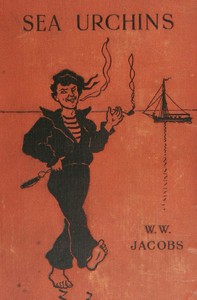
Before opening Sea urchins — Edition Insights, the edition data offers a quick orientation: 53,243 words, 3 hr 52 min estimated reading time, and 17 detected text sections.
The text analysis averages about 14.7 words per sentence, while the detected sections provide another way to judge how the source is divided.
Project Gutenberg metadata also associates the work with “Humorous stories, English,” connecting these edition facts with the source record’s subject description.
Explore this collection
These alternatives are selected using recorded categories and estimated reading time.
About 232 minutes
Sailors Ships
53,247 recorded words. 0 minutes difference from this book's estimate.
View Gutenberg source #25769About 245 minutes
Sailors Ships
56,338 recorded words. 13 minutes difference from this book's estimate.
View Gutenberg source #1698About 247 minutes
Sailors Ships
56,644 recorded words. 15 minutes difference from this book's estimate.
View Gutenberg source #1652Search stored excerpts and compare books → Choose by your preferences →
Choices use stored catalog measurements. Estimates vary with reading speed. A shared category is a catalog label, not a claim that two books have the same argument or literary quality.
Search reads excerpt text stored with this catalog and links to its associated Gutenberg record. The connection is stored in the site database; this tool does not recheck that every excerpt is word-for-word identical to that external record. Excerpt search does not cover every chapter and does not verify historical publication dates.
Catalog snapshot checked: 2026-09-26. Coverage: 95 public books, 95 available source excerpts.
Calculated from edition completeness, EPUB availability, text structure and catalogue metadata. Not a user rating.
Total of 100 points, scaled to a 2.5-5.0 range. Editions with an empty description or a missing EPUB file are not scored.
Public-domain source text
The source text is kept in the dedicated reader, separate from this catalogue record and its commentary.
In the opening story, “Smoked Skipper,” a fourteen-year-old boy tries to haggle down a porter’s fee from half a crown to sixpence, using nautical commands like “Starboard, starboard your hellum a bit” to assert authority. The porter and a waterman immediately collude to raise the price, and the boy only escapes by fetching a policeman. This scene sets the tone for the collection: characters constantly negotiate, cheat, and bluff over small sums, and the sea serves as a backdrop for these transactions rather than for heroic voyages.
The excerpts are thick with working-class London and seafaring dialect. Porters say “Fust v’y’ge, sir?” and “I could twig that directly I see you.” Sailors speak of “’arf-crown” and “eigh-teen pence.” Jacobs renders these voices with phonetic spelling and a keen ear for rhythm. The humor often comes from the gap between what characters say and what they mean. In “Smoked Skipper,” the boy’s confident commands are undercut by his inability to pay. In “The Disbursement Sheet,” the mate’s deadpan replies to the skipper’s distress—“I s’pose he was late and didn’t like to disturb you”—show how language is used to deflect blame and maintain a facade of innocence.
Nearly every excerpt revolves around a sum of money: the half-crown fare, the twenty-three pounds of freight money, the fourpence halfpenny and brace buttons left in its place. The catalog subjects list “Sailors – Fiction” and “Seafaring life – Fiction,” but the excerpts show that Jacobs is less interested in storms or navigation than in the economics of the waterfront. Money is always in dispute—who owes what, who has been cheated, how to recover a loss. The crew in “Smoked Skipper” refuses to believe that Brother Hutchins stole the money, not out of loyalty but because they have already spent the five pounds he gave them. The comedy arises from the tension between moral outrage and self-interest.
Jacobs repeatedly pairs a naive or overconfident character with a sharper one. The boy in “Smoked Skipper” thinks he can outwit the porter but is saved only by a policeman. The skipper in the same story is outmaneuvered by his own crew. In “The Disbursement Sheet,” the old owner’s simple system—cash divided on the table—is contrasted with the new owner’s discovery of Simmons’s coded bookkeeping. The excerpts do not reveal whether Simmons is honest or crooked, but the pattern is clear: Jacobs builds stories around a confidence game, where the reader watches the dupe realize he has been tricked. The endings are often abrupt, leaving the moral ambiguity intact.
Readers should approach Sea Urchins as a series of comic vignettes rather than a novel. The stories reward attention to dialect and to the small, telling details of negotiation. Jacobs’s world is one where everyone is trying to get the better of someone else, and the humor lies in the ingenuity of the schemes and the predictability of the outcomes. The catalog subjects are accurate but incomplete: the stories are less about the sea than about the people who live by it, and less about adventure than about the struggle for a few shillings.
Those urchins made me laugh, but also left a quiet ache—all that bluffing over nothing, like we do. It reminded me of another voice from the sea, younger and more raw, learning the same hard lesson: that the water doesn't care about your stories. Redburn. His First Voyage Being the Sailor Boy Confessions and Reminiscences of the Son-Of-A-Gentleman in the Merchant Navy — Context and Discussion carries that same feeling, and I keep thinking about it now.
Build a private reading journal entry for this title.